
Interior Painting in Volusia and Seminole Counties
What the work is, in the order it happens
- Walk-through and scope. Every room gets looked at in daylight, with a light held low across the walls. That shows dents, drywall seams, nail pops and roller texture that you cannot see straight on.
- Protection. Floors are covered, furniture is moved to the middle of the room and wrapped, and outlets, vents and hardware are masked or removed. In an occupied home this is what keeps the house livable for the week.
- Repairs. Nail holes, dings and cracks are filled and sanded flush. Failed caulk at trim, baseboards and window casings is cut out and replaced. Larger drywall damage is patched, taped, floated and sanded before it ever sees paint.
- Stains and problem spots. Water stains, smoke, crayon, tannin bleed from old wood and rust marks get a stain-blocking primer. Fresh patches get primed so they do not flash through the finish coat as dull spots.
- Cutting in and rolling. Ceilings go first, then walls, then trim, so drips fall on surfaces that have not been finished yet. The line where wall meets ceiling is cut by hand, and that line is the first thing anyone’s eye finds in a room.
- Trim, doors and cabinets. Baseboards, casings, doors and cabinet boxes and doors painted in place get sanded, cleaned and primed for adhesion, then finished in a harder, more washable sheen than the walls.
- Walk-through and touch-up. The last pass is done with the lights on and the masking off, with you, before the crew packs out.
The decisions that move the price
- Condition of the surfaces. A clean, sound wall needs light prep. A wall with years of patched holes, mismatched texture and peeling tape joints needs hours of sanding and skim work. Prep time is most of the labor, so this is usually the biggest swing.
- Ceiling texture. A smooth or lightly textured ceiling rolls quickly. A popcorn ceiling cannot be rolled the way a flat one can, because the texture soaks up paint and sheds if it is disturbed. Painting it, scraping it or covering it are three different jobs at three different costs.
- Color change. Going from a dark accent wall to a pale neutral takes more coats and a tinted primer. Staying close to the existing color takes fewer.
- Ceiling height. Vaulted ceilings, two-story foyers and stairwells need scaffolding or ladder setups and slow the work down a great deal.
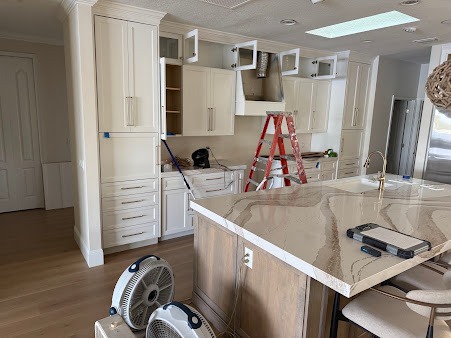
- Trim, doors and cabinets. Each of these adds surface area that is detail work, not roller work. Painting kitchen cabinets in place is a full job of its own, with degreasing, sanding and priming before any color goes on.
- Occupied or vacant. A vacant unit lets the crew work room to room without moving furniture. An occupied home takes longer because everything has to be moved, protected and put back.
- Sheen. Flat hides wall flaws but marks easily. Eggshell and satin clean better but show every ripple in a poorly prepped wall, which means more prep to make them look right.
What is different about painting in Central Florida
- Block walls. Most houses built here before 2000 are concrete block with stucco outside and furring strips with drywall inside. The drywall sits against masonry, not in a framed cavity. That means hairline cracks that open at corners and window headers as the block shifts and cycles with heat, and they need the right flexible filler, not a quick coat of spackle. It also means fewer places to hide a bad repair.
- Slab on grade and moisture. There is no crawlspace or basement here, and concrete slabs take on and release moisture year-round. Bubbling, blistering or chalky paint at the base of a wall can mean moisture is moving through the wall, and it needs to be understood before it is painted over. Fresh paint over a moisture problem lasts a few months.
- Humidity. Bathrooms without a working exhaust fan grow mildew on the ceiling no matter how good the paint is. Closets, laundry rooms and walls behind furniture in outside corners do the same. Mildew gets killed and cleaned before it is primed, and a mildew-resistant finish is a good choice for wet rooms. But if the air in the room never moves, the dark spots come back, and the fix is the fan, not another coat.
- Sun. Rooms with big west or south windows and Florida rooms get strong ultraviolet light for most of the day. Walls fade, trim yellows and dark colors lose depth faster than owners expect. Choosing a color and a finish with that in mind saves a repaint.
- Age of the housing stock. Across Volusia and Seminole, the older neighborhoods in Deltona, Orange City, Sanford and DeBary are mostly from the sixties through the eighties, with textured ceilings and plaster-look walls. Newer subdivisions in Lake Mary, Oviedo and Winter Springs usually have lighter orange-peel or knockdown texture and builder-grade paint that was applied thin. Each age of house has its own habits, and the estimate should reflect which one you have.
- Termites and hidden damage. When a baseboard or a section of trim comes off in an older Florida house, it sometimes reveals termite damage or soft wood behind it. When that happens, work stops on that spot. You are told what was found, and the repair is done by the right trade before any paint goes over it.
One thing most people believe that is not true
Many homeowners think a water stain on a ceiling can be primed and painted and the problem is solved. A stain-blocking primer will hide the mark, but it does nothing about the leak that made it. If the source is a roof, a supply line, an air handler drain pan or a bathroom above, the stain comes back, and sometimes with a soft spot in the drywall. Iron Site does not do roofing, plumbing or HVAC work, and will not paint over an active leak. The right order is that the licensed trade fixes the source first, the drywall is repaired if needed, and then the ceiling gets primed and painted. Done in that order, it only has to be done once.
The same goes for popcorn ceilings. In any house built before the mid 1980s, the texture is tested before it comes down. If it comes back positive for asbestos, the removal is a job for licensed abatement and not for a scraper and a spray bottle. If it comes back negative, the texture can be removed and the ceiling finished smooth, or it can be painted as is.
What to have ready before the estimate
- Photos of every room you want painted, including ceilings and any stained or cracked areas.
- A list of what is included: walls, ceilings, trim, doors, cabinets, closets.
- The approximate year the house was built, and whether any ceilings are textured.
- Any known leaks, past repairs or places where paint has bubbled or peeled.
- Rooms with high ceilings, stairs, or furniture that cannot be moved easily.
- Color ideas, or a note that you want to stay close to what is there now.
- For rentals, the move-out date, the unit count and any rooms that need extra attention.
Where the work gets done
Painting a house before it is listed? Our pre-listing repairs, paint and cleanouts for realtors page explains how we work with agents.