
Interior Painting in Orange City, Florida
Orange City went up mostly between the 1960s and the 1980s, block construction under popcorn ceilings, and a large share of it is now inside 55 and over communities where the person calling us is thinking less about color and more about whether their mother can still safely use the bathroom down the hall. The other call we get just as often is from a son or daughter out of state, closing on a parent’s house in six weeks and needing the carpet gone, the walls painted, and the place ready to photograph.
Neither of those is a typical paint job, and neither should be priced or scheduled like one. A straightforward repaint on a house with sound walls and no texture issues is one conversation. A house with forty years of popcorn ceiling, hairline cracking at the drywall seams from slab movement, and a bathroom that needs blocking added in the wall before a grab bar goes up is a different conversation, and it starts with us actually looking at the walls before we quote anything.
If you’re weighing a repaint against a fuller update, our interior painting page covers the service itself in more depth, and our Orange City service area page lists everything else we handle in town. For this job, the next step is simple: call and tell us what you’re looking at, the room, the ceiling, the timeline, and we’ll tell you what has to happen before paint goes on anything.
What drives the work in this housing stock
Most Orange City homes from the era this town was mostly built in are concrete block with furring strips and drywall fastened over them, not wood stud framing with an open cavity behind it. That matters for paint in a few ways. There’s no cavity to absorb minor settling, so cracking at seams and corners tends to show up as a hairline split rather than a clean joint failure, and it needs to be addressed with mesh tape and a proper bed coat, not just caulk and a quick coat of paint over the top.
Ceilings are the other constant. Popcorn texture was standard on nearly everything built here into the 1980s, and it does not take paint the way a smooth ceiling does. Rolling straight over aged, failing texture usually telegraphs every flaw in the surface and can knock texture loose in patches as the roller drags. On anything built before the mid 1980s, we test the texture before we touch it. If it comes back positive, that material goes to licensed abatement, not to us with a scraper. If it’s clear, we can scrape and skim it, or paint it in place if it’s still sound and the ceiling isn’t a priority for this round.
When the job is about aging in place, not style
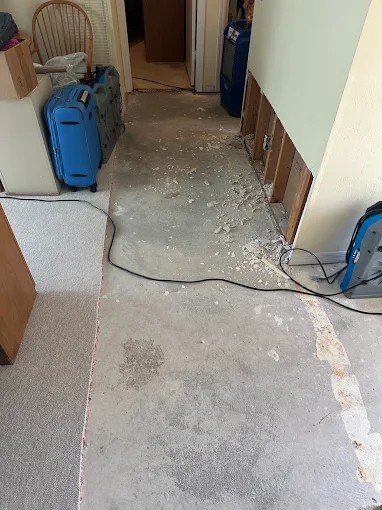
A noticeable share of what we’re asked to do inside Orange City houses isn’t cosmetic. It’s a tub that’s become hard to step into safely, a hallway or bathroom doorway too narrow for a walker or wheelchair, or a shower that needs to go curbless with grab bar blocking added in the wall before anything gets tiled or painted back over. Interior painting is usually the last step in that sequence, not the first, and it only looks right if the drywall work and trim ahead of it was done cleanly.
Where that kind of job needs a wall opened to add blocking, or a doorway widened, we’ll tell you plainly what’s structural and what isn’t. Adding blocking in an existing wall for a grab bar is drywall and carpentry work we handle directly. Widening a doorway that touches a load-bearing wall, or any plumbing move for a curbless shower pan, is work a licensed contractor needs to pull a permit for and perform. We’ll coordinate around that so the schedule holds together, but we won’t tell you we’re doing something we’re not qualified to do, and you shouldn’t want a company that would.
- Inspect the surfaces. Walls, ceilings, trim, doors and cabinets being painted in place are checked for peeling paint, cracks, stains and previous repairs. This inspection helps determine the preparation required.
- Protect the home. Furniture and belongings are moved away from work areas where possible. Floors, fixtures and surfaces that are not being painted are protected. In occupied homes, the work can be organized around access to essential rooms.
- Repair and prepare. Minor drywall damage and nail holes are patched and sanded. Gaps around trim are caulked where appropriate, and stains may require a stain-blocking primer. Bare and repaired areas are primed as needed to support an even finish.
- Apply the paint. The crew paints the agreed surfaces, including walls, ceilings, trim, doors and cabinets in place. Clean lines around ceilings, corners and trim require careful preparation and application.
- Inspect the finish. Painted areas are checked for missed spots, uneven coverage and visible defects that need attention before the space is put back into use.
Estate turnovers on a closing date
The second recurring job in Orange City is a house changing hands after a death or a move into assisted living, usually with a family member managing it long-distance and a closing date already on the calendar. These jobs move fast and they move in a specific order: cleanout first, so we can actually see the walls and floors underneath whatever furniture and belongings have been sitting there, then drywall patching and painting, then flooring if the carpet is being pulled.
Vacant houses in this housing stock often reveal more than an occupied one would. Months with the air conditioning off or set high lets humidity creep into drywall and baseboards, and you’ll sometimes find soft spots, staining, or a musty smell behind furniture that’s been in the same spot for years. We check for that before we price the paint, because a wall that needs replacement sheet instead of a patch changes both the cost and the schedule, and nobody wants that surprise discovered mid-job with a closing date already set.
How the job actually runs and where price moves
The sequence is the same whether it’s an occupied home or an empty one, but the amount of each step changes with what’s underneath. First is the walkthrough: every wall and ceiling gets looked at, not just the room someone mentioned on the phone, because cracking and staining in one room often points to the same thing happening quietly in the next one over.
Then comes prep, which is most of the actual labor on any repaint. Nail pops and cracks get cut out and refilled properly rather than skimmed over. Stains, whether from an old leak, nicotine, or crayon, get sealed with a stain-blocking primer so they don’t bleed back through the finish coat. Caulk lines at trim and ceiling get redone where they’ve pulled away. If popcorn texture is coming down, that’s its own phase after testing clears it. None of the finish paint goes on until this part is done, because paint doesn’t hide bad prep, it just shows it in better light.
The price moves at a few specific points: how much drywall repair is needed beyond simple patching, whether ceiling texture is coming off or staying, how many coats a color change or a stain requires, and whether trim, doors, and cabinets are part of the scope or just walls and ceilings. We’ll walk you through each of those before we give you a number, not after.
The honest constraint
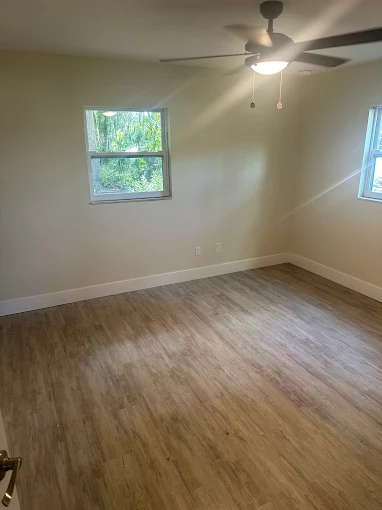
Here’s what tends to surprise people in Orange City specifically: because so much of the housing stock here is older and has been through decades of Florida humidity, the prep phase runs longer than it would on a newer house in a newer part of the county. A repaint that would take two days on drywall over wood frame with no texture issues can run longer here once popcorn testing, texture removal, and seam repair get added in. That’s not padding. It’s the actual condition of forty to sixty year old block construction, and pricing it as if it were a newer house just means an unpleasant change order partway through.
What to have ready before you call
Walk through the house and note which rooms have visible ceiling texture, any cracking you can see at wall seams or around windows and doors, and any staining, past or present, on walls or ceilings. If the house was built before the mid 1980s, assume the ceiling texture needs testing and mention that upfront. If this is an estate situation, have the closing date or target move-out date ready, along with whether the carpet is being pulled, since that changes the order we work in. If this is an aging-in-place project, know which bathroom or hallway is the priority and whether grab bars or a curbless shower are already planned, so we know what blocking or wall work needs to happen before paint is the last thing on the list.
Get a free estimate
Call (386) 345-2852 and tell us what you’re looking at, whether it’s one room that needs refreshing or a whole house ahead of a closing. We’ll ask a few questions about the age of the house and what you’re seeing on the walls and ceilings, and we can usually get out to look at it and give you a straight answer on scope before anything gets scheduled.