
Residential Cleaning in Winter Springs, Florida
Most of Winter Springs is Tuscawilla, and most of Tuscawilla went up in the 1980s and 1990s under oak canopy that has had thirty or forty years to fill in. That canopy changes what a house needs on the inside and the outside, and it’s the reason the same cleaning job here runs differently than it does in a neighborhood with full sun and younger landscaping.
Shaded two-story stucco holds moisture longer than homes that get sun most of the day. North-facing walls in particular stay damp after a rain, which means mildew gets a head start, pollen and leaf litter pile up on sills and screened porches, and dust tracked in from a yard that never fully dries out settles into carpets and tile grout faster than it would in a drier, sunnier lot. If you’re in one of these homes and the house feels like it needs attention again two weeks after the last clean, that’s not you imagining things. That’s the canopy doing what the canopy does.
Inside, Tuscawilla’s floor plans add their own wrinkle. A lot of these homes have the two-story foyer with a chandelier nobody wants to climb a ladder to dust, a formal dining room that gets used four times a year and collects dust the other 361 days, and a kitchen that was built closed off from the family room, which means less natural light reaching tile and counters and more corners that stay shadowed and grimy longer between cleanings. None of that is a problem a general cleaning checklist solves on autopilot. It’s a reason to scope the job to the actual house before anyone shows up with supplies.
If you want to know what’s driving the buildup in your own house, start with the shaded exterior walls and the screened porch before you call, and read on for how recurring cleans, deep cleans, move-out cleans, and post-construction cleans each handle that differently.
Why the oak canopy changes the cleaning job
Full sun bakes dust and pollen off a roofline and a porch within a day or two. Oak canopy does the opposite. It drops a steady supply of leaf litter, pollen, and organic debris onto roofs, gutters, screened enclosures, and window sills, and it blocks enough sun that surfaces under it stay damp longer after every rain. That combination is why north- and east-facing exterior walls in Tuscawilla tend to show mildew staining in patches rather than evenly, and why screened porches here collect a film of green-black residue faster than the same feature on an unshaded lot across town.
Inside the house, the effect shows up as more frequent dust and pollen tracked in on shoes and pets, more condensation on window glass in shaded rooms, and baseboards and door tracks that need wiping down more often than a cleaning schedule built for a sunnier house would assume. A recurring cleaning plan for a canopy-covered Tuscawilla home gets built around that reality from the start rather than discovered three visits in.
Recurring cleaning versus a deep clean
A recurring clean maintains a house that’s already in reasonable shape: kitchens, bathrooms, floors, dusting, and the general upkeep that keeps a home livable between visits. A deep clean is a different scope entirely, and it’s usually what a Tuscawilla homeowner needs first before settling into a recurring schedule, especially if the shaded elevations and screened porch have gone a season or two without real attention.
Deep cleaning means baseboards, window tracks, ceiling fan blades, interior of appliances, grout lines, light fixtures including that two-story foyer chandelier, and the buildup in corners and under furniture that a standard visit doesn’t touch. On a canopy-shaded home, the deep clean is also where mildew film on screened porch surfaces, sliding door tracks, and north-facing window exteriors gets addressed, since those areas accumulate faster here than they would on an unshaded property. Once the deep clean resets the house, a recurring schedule holds that baseline instead of chasing it.
Move-in, move-out, and post-construction cleans are not the same job
These three get lumped together constantly and they shouldn’t be. A move-out clean prepares a vacated home for new occupants or a sale, and it covers every surface top to bottom: inside cabinets and drawers, inside appliances, closets, baseboards, and every bathroom, because the next person moving in has no tolerance for someone else’s residue. A move-in clean is the same scope applied before you unpack rather than after you leave.
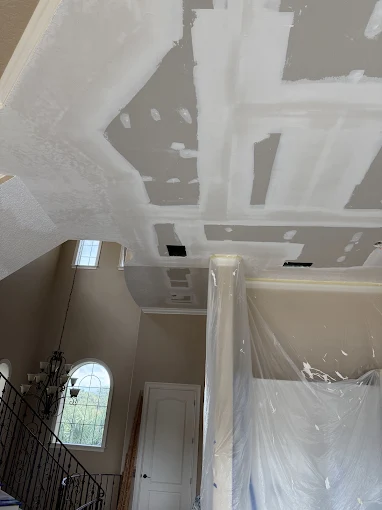
A post-construction clean is a different job again. If you’ve had drywall patched, trim replaced, a kitchen refaced, or flooring installed, the dust from that work gets into places a normal clean never reaches: inside light fixtures, on top of door casings, in HVAC return grilles, and as a fine film on every horizontal surface in rooms you weren’t even working in. That dust is finer and more pervasive than everyday household dust, and it takes a different approach, more passes, and different equipment to pull out of carpet and upholstery than a standard deep clean does. On a two-story Tuscawilla home where trim and molding work is common, the post-construction clean also needs to account for stairwells and landings, which collect settled dust that gravity pulls down from upper floors long after the work crew has left.
Recurring house cleaning
Recurring cleaning maintains a home through regular visits. It helps manage everyday dust, kitchen residue, bathroom buildup, and floor dirt before they accumulate. This option suits occupied homes that need ongoing maintenance. For Winter Springs residents who commute during the day, scheduling may be arranged around working hours and agreed access arrangements.
Deep cleaning
Deep cleaning is suitable for homes that need more detailed attention than a routine visit provides. The work may include additional attention to accumulated grime, neglected corners, bathroom surfaces, and kitchen areas. The property's starting condition determines how much time is needed.
Move-in and move-out cleaning
Moving creates different priorities. A departing occupant may need cleaning after furniture and personal belongings have been removed. Someone moving into an older Winter Springs home may want kitchens, bathrooms, accessible surfaces, and floors cleaned before unpacking. An empty property can make some areas easier to reach, but it does not automatically reduce the workload. The condition of the rooms, fixtures, and surfaces still determines the cleaning requirements.
Post-construction cleaning
Renovation work can leave fine dust on surfaces, along trim, inside accessible cabinets, and across floors. Post-construction cleaning requires a separate assessment because the amount of dust and debris depends on the work completed. Tell the cleaning team whether renovation work has finished, which rooms are ready, and what needs attention. The scope should be agreed before scheduling.
Seasonal and snowbird properties need their own scope
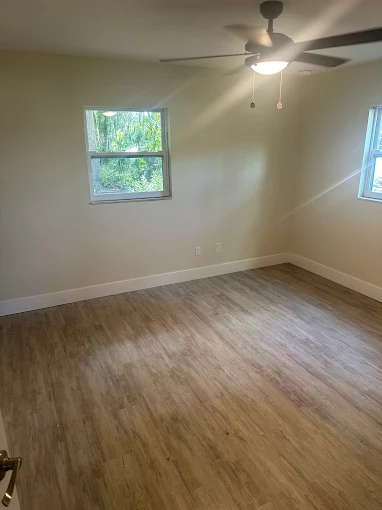
Winter Springs has its share of homes that sit empty for stretches of the year, and an empty house under oak canopy doesn’t stay clean on its own. Closed-up rooms with limited air circulation trap humidity, and in a shaded, slab-on-grade house that humidity shows up as a musty smell, dust accumulation on still air currents, and sometimes early mildew on interior surfaces near exterior walls before anyone’s even noticed a problem. A pre-arrival clean for a seasonal property needs to check those shaded, closed-off rooms first, run through every bathroom that hasn’t seen water movement in months, and address window sills and screened areas that have had an entire season to collect pollen and debris with nobody opening a door to let it blow through.
What actually moves the price on a Tuscawilla job
A few decision points consistently change the scope and the time a cleaning job takes in this neighborhood. Square footage and bathroom count are the obvious ones, but two-story layouts add stairs, railings, and landings that a single-story home of the same size doesn’t have, and that adds time regardless of total square footage. Whether the kitchen is open to the family room or still walled off the original way matters too: a closed kitchen gets less ambient light and tends to need more deliberate attention to counters and cabinet fronts that stay shadowed most of the day.
Condition of the screened porch and exterior-facing glass is the other major factor specific to this area. A porch that’s been neglected under heavy canopy for a year or more takes meaningfully longer to bring back than one that gets attention every few months, and that’s worth mentioning when you describe the job over the phone so the estimate matches the actual condition rather than a guess.
- Property size: Identify the number of bedrooms, bathrooms, and additional rooms requiring cleaning.
- Type of cleaning: Specify recurring cleaning, deep cleaning, move-in or move-out cleaning, or post-construction cleaning.
- Current condition: Mention accumulated dust, kitchen grease, bathroom residue, or pet hair.
- Occupancy: Explain whether the property is occupied, empty between tenants, or closed seasonally.
- Priority areas: Identify the rooms and surfaces that need the most attention.
- Schedule and access: Share your preferred timing and any arrangements needed to enter the property.
The honest constraint and what to check before you call
Here’s the part that catches people off guard: a Tuscawilla home that looks clean at a glance can still be holding mildew and accumulated grime in the shaded corners and on the north-facing exterior that you don’t walk past every day. That means a first visit, whether it’s a deep clean or a move-out clean, often runs longer than a homeowner expects based on how the house looks from the front door. It’s not padding the job. It’s the canopy’s effect finally getting addressed all at once instead of gradually over years.
Before you call, walk your screened porch and look at the north and east exterior walls for staining, check window tracks on any sliding doors for buildup, and if you’re dealing with a post-construction situation, note which rooms had work done versus which ones are just dusty from proximity. That information lets us scope the visit accurately instead of estimating blind. If you’re deciding between a recurring plan and a one-time deep clean, our residential cleaning page breaks down what each visit type includes, and if you want the broader picture of what we handle across the rest of the property, the Winter Springs page covers the other services we run in your neighborhood.
Next step
Tell us which situation you’re in: a recurring schedule for a shaded two-story home, a deep clean to reset a porch and exterior that have gone too long without attention, a move-out clean ahead of a sale, or a post-construction clean after trim, drywall, or flooring work. We’ll scope it to the actual house rather than a generic checklist. Call (386) 345-2852 for a free estimate.