
Drywall Repair and Replacement in DeBary, Florida
Glen Abbey and Saxon Woods went up between the late 1970s and the 1990s, and that puts a lot of DeBary at the exact age where the original popcorn ceiling, the original kitchen, and a wall that has taken forty years of door slams and furniture moves are all due for attention in the same year. Whoever is buying or renting these homes now expects them finished, not patched, and that is the call we get most from this part of town.
Because this is where Iron Site Property Services is based, a drywall call in DeBary is usually the shortest drive of the day for us, and it is also the housing stock we know best from the inside of the wall out. Before you call, take a look at the area that is bothering you: a hole, a cracked corner, a ceiling stain from a leak somebody else already fixed, or a whole room that needs texture matched after other work. Knowing which one it is gets you a faster, more accurate estimate.
What drives drywall work in DeBary's older subdivisions
Most of the homes in Glen Abbey and Saxon Woods are concrete block with furring strips and drywall fastened over them, not stick frame with open stud cavities. That single fact changes how a patch gets done. There is no cavity to work inside, so a hole in a furring-strip wall has to be backed and anchored into the strip itself or the patch will flex and eventually pop loose again. A crew that treats this like a wood-frame house ends up with a repair that fails within a year, and we see that kind of redo work more than we would like.
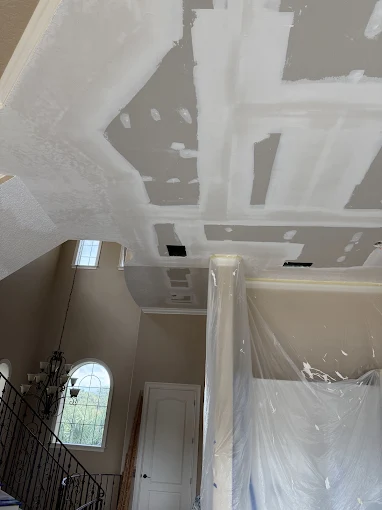
The other thing that shows up constantly in this age of home is a popcorn ceiling that has never been touched. If your house was built before the mid 1980s, that texture gets tested before anything is scraped or sprayed down. A negative result clears the way for removal and a smooth or lightly textured finish. A positive result means the job pauses and a licensed abatement company handles that portion before we come back to finish the ceiling. We will not describe or offer to do that part ourselves, and anyone who tells you they can just scrape it down without testing first is skipping a step that matters.
River humidity and what it does to walls and soffits
DeBary sits right along the St. Johns River, and the properties closer to the water deal with a kind of constant humidity that inland Volusia County doesn’t get the same way. Shaded elevations and north-facing walls stay damp longer after rain, and that shows up as mildew staining on soffits, trim, and the drywall just inside exterior walls in rooms that do not get much air movement. When we open up a section of wall in one of these homes and find soft or discolored drywall, the material gets cut back past the stain, the area gets checked and allowed to fully dry, and new drywall goes in rather than skimming over a spot that is still holding moisture.
- Identify what needs to go. Walk through the rooms, garage, attic, shed and other storage areas. Separate unwanted furniture, appliances, boxes and household clutter from belongings you intend to keep. This helps establish the actual scope of the job.
- Assess access and handling. A large item near an accessible entrance may be straightforward to remove. Bulky furniture in an attic, heavy appliances or items stored behind other belongings can require more time. Stairs, narrow doorways, limited parking and longer carrying distances can also affect the work.
- Determine the size of the cleanout. Removing a few items from one room differs from emptying a garage or preparing an entire property for new occupants. The amount of material, the number of areas involved and the type of items all influence the workload.
- Discuss the estimate. Describe the items and areas involved, including any access challenges or unusual handling requirements. Photos can help communicate the scope before an estimate is arranged.
What a repair or replacement job actually involves
The sequence matters because it is where the price and the timeline get decided. First, the damaged section gets assessed: is this a clean hole that can be patched, a cracked joint that needs re-taping, or water damage that requires cutting back further than it looks like it should. On a furring-strip wall, the patch has to tie into the strips, which sometimes means a slightly larger cutout than you would expect for a small hole, because the backing has to land somewhere solid.
Next is hanging the new material, taping the joints, and running the coats of mud, each one needing to dry before the next goes on. Then comes texture matching, which is its own decision point. Matching a popcorn ceiling that has already been patched once or twice before gets harder each time, and we will tell you honestly if a section is better off redone fully rather than patched again. Last is prime and paint, which we handle as part of the same job rather than leaving you to find a separate painter.
The honest constraint: block walls slow some repairs down
If you’re used to drywall repair quotes from up north, the furring-strip construction here can feel slower and slightly more involved than expected, and that’s worth saying plainly rather than letting it surprise you at the end. A simple patch job on a wood-frame wall might be a same-day fix. On a furring-strip block wall, finding solid backing, confirming there’s no moisture behind the surface, and making sure the patch is anchored correctly sometimes adds a step or two that a stick-frame repair never needs. It is not a reason to cut corners on the anchoring, because a patch that isn’t backed properly into the strips will show movement again within a season.
What to check before you call
Walk the room and note whether the damage is isolated to one spot or spread across a wall or ceiling, since that changes whether this is a patch or a full re-hang. If it’s a ceiling stain, confirm the leak that caused it has actually been fixed and the area is dry, because drywall work on an active leak just means doing it twice. If you know roughly when the house was built or last renovated, especially if it’s original to the Glen Abbey or Saxon Woods era, mention that when you call. It tells us right away whether texture testing needs to happen first.
You can see the full scope of our drywall repair work on the main service page, and there’s more on how we work in DeBary if you want a wider look at what we handle around town, from the SunRail corridor’s newer builds to the older riverfront streets.
Scheduling around a commuter neighborhood
The SunRail station brought a newer wave of construction and a resident population that’s often gone from early morning until evening on a train into Orlando or Sanford. That changes how we schedule a drywall job in those newer DeBary streets compared to the older subdivisions where someone’s often home. We can work around an empty house during the day and coordinate access without needing you to take time off, which matters more here than it does in a lot of the other towns we cover.
- Make a list of unwanted items. Identify the furniture, appliances, boxes and other belongings that need to be removed.
- Check each area. Look through the garage, attic, shed, spare rooms and outdoor storage spaces so the full scope is clear.
- Review access. Note stairs, narrow doorways, gates, parking limitations and obstacles between the items and the pickup location.
- Take photos. Pictures of the largest items and each area can help communicate the amount of material involved.
- Identify special handling needs. Mention unusually heavy items, mixed debris or materials that may require separate disposal arrangements.
- Consider the next stage. If the property needs painting, flooring installation, cleaning or repairs after the cleanout, explain your intended schedule.
Matching texture across rooms that were never finished the same way
A lot of the original Glen Abbey and Saxon Woods homes have slightly different texture from room to room, sometimes because of additions or partial remodels done over the decades. When we patch one section, we match that specific room’s texture rather than assuming the whole house is uniform. It is a small detail, but it is the difference between a patch you can see from the doorway and one you can’t find once the paint is on.