
Interior Painting in Port Orange, Florida
Walk through a block home off Dunlawton built in the 1970s or 80s and you’ll usually find the same ceiling texture, the same hairline cracking at the drywall seams near the windows, and walls that have been painted over old stains more than once without anyone addressing what caused them. Port Orange’s housing stock skews older and coastal, and that combination means the inside of a house shows wear in specific, predictable places that a straight repaint won’t fix if the prep gets skipped.
Iron Site Property Services handles interior repaints for occupied homes, vacant seasonal properties, and rental units across Port Orange, from the older block houses near the beach side to the newer construction in Spruce Creek and Port Orange Plantation. The work is mostly in the prep, not the roller. Call (386) 345-2852 for a free estimate, or keep reading for what actually drives the cost and the timeline on a Port Orange interior.
What Drives Interior Painting Costs Here
The paint itself is the cheap part. What moves the price is how much of the surface needs work before a coat goes on. In Port Orange specifically, three things come up more often than they would inland:
- Stain bleed-through near exterior walls. Block construction with stucco on the outside means moisture that gets into hairline stucco cracks or works through aging mortar joints can show up as yellow or brown staining on the inside face of that same wall, usually near a window or corner. That staining has to be sealed with a stain-blocking primer before color goes on, or it bleeds right back through within weeks.
- Ceiling texture condition. A lot of the 1970s and 80s stock still has its original popcorn ceiling, and it’s often cracked, water-stained, or patched in spots from old repairs. That texture can’t just be rolled over and called done.
- Cabinet and trim condition in coastal-humidity bathrooms. Cabinets painted in place, especially in bathrooms without strong exhaust fans, often have soft or peeling finish at the corners and near the sink that needs to be scraped back to sound material before refinishing.
None of this is unusual for the area. It’s just the difference between a quote that holds and a quote that grows once the painters get a ladder up.
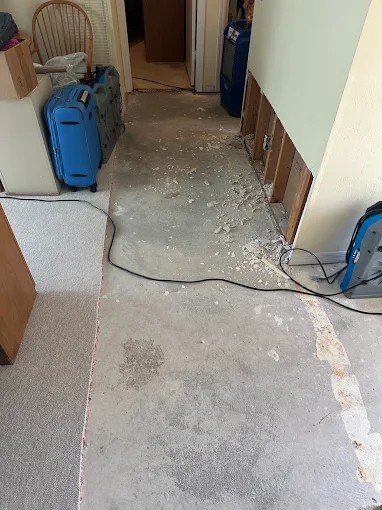
Popcorn Ceilings: What Has to Happen First
If your house was built before the mid-1980s, which covers a large share of the block homes between Dunlawton and the river, the ceiling texture gets tested before anyone touches it. That’s not a formality. A positive asbestos result means the ceiling goes to a licensed abatement contractor, not a scraper and a spray bottle, and that’s true no matter how small the room or how old the house looks. If the test comes back clear, we move ahead with wet-scraping or skim-coating the texture smooth, patching any damage, and priming before paint. Homes built after the mid-80s are generally lower risk, but we still confirm before removing anything.
- Inspect the surfaces. Walls, ceilings, trim, doors and cabinets being painted in place are checked for peeling paint, cracks, stains and previous repairs. This inspection helps determine the preparation required.
- Protect the home. Furniture and belongings are moved away from work areas where possible. Floors, fixtures and surfaces that are not being painted are protected. In occupied homes, the work can be organized around access to essential rooms.
- Repair and prepare. Minor drywall damage and nail holes are patched and sanded. Gaps around trim are caulked where appropriate, and stains may require a stain-blocking primer. Bare and repaired areas are primed as needed to support an even finish.
- Apply the paint. The crew paints the agreed surfaces, including walls, ceilings, trim, doors and cabinets in place. Clean lines around ceilings, corners and trim require careful preparation and application.
- Inspect the finish. Painted areas are checked for missed spots, uneven coverage and visible defects that need attention before the space is put back into use.
The Order the Work Actually Happens In
An interior repaint isn’t one step. It’s a sequence, and skipping ahead in that sequence is where bad paint jobs come from:
- Walkthrough and surface check. We look at every wall and ceiling for cracking, staining, old patch work, and texture condition, and flag anything that needs more than a quick fill.
- Repairs and patching. Drywall cracks, nail pops, old screw holes, and any texture matching happen here, including popcorn ceiling testing and remediation if the house’s age calls for it.
- Caulking and sealing. Gaps at trim, baseboards, and ceiling lines get caulked so the paint line reads clean instead of showing a shadow gap once it’s dry.
- Priming. Stain-blocking primer goes over any water marks or repairs. Bare patches and new drywall always get primed; skipping this step is how flashing and uneven sheen show up later.
- Cutting in and rolling. Ceilings first, then walls, then trim and doors. Cabinets painted in place get their own prep pass, since cabinet finish behaves differently than wall paint and needs a different primer and a sprayed or brushed finish depending on the look you want.
Where the price moves is almost always in steps two and three. A room with clean, sound drywall and no staining takes a fraction of the labor of a room with cracked texture and water marks on two walls, even though both rooms end up looking identical when it’s done.
The Honest Constraint: Salt Air Shortens the Clock on Exterior-Adjacent Work
Port Orange sits at the coastal edge of the territory, and that changes more than just exterior paint life. If your interior work touches a wall that backs up to an exterior stucco surface, and that stucco has started hairline cracking or shows efflorescence on the block beneath it, painting the interior side without addressing what’s happening on the exterior side is a short-term fix. We’ll tell you if we see it. A prep job that would hold for years in a home further inland won’t hold the same way here, and papering over a moisture source with a fresh coat just means you’re painting that wall again sooner than you’d expect. We’re not going to quote over that and let you find out later.
What to Have Ready Before You Call
Walk your rooms before the estimate and note a few things: any ceiling or wall stains and where they are, whether the house was built before or after the mid-1980s if you know it, any rooms with visible texture damage or old patch repairs, and whether cabinets or trim need refinishing along with the walls. If the property is a seasonal rental or sits vacant part of the year, mention that too, since turnover timing and access are different from an occupied home.
If you’re also dealing with exterior fading or stucco cracking on the same property, that’s a separate scope from interior painting, but it’s worth mentioning at the estimate since the two often get planned together on older Port Orange homes. You can see more about how we work in this part of the county on our Port Orange service area page.
Rental and Seasonal Turnovers
A large share of Port Orange properties, especially near Spruce Creek and the beachside neighborhoods, sit empty for months at a time between seasonal residents or change hands between tenants on a yearly cycle. Those properties need a different kind of attention: a quick but thorough check of walls and ceilings for new staining or damage that happened while the place was unoccupied, touch-up or full repaint depending on wear, and often a cleaning pass alongside the paint work before the next occupant arrives. We handle that turnaround work regularly and can coordinate the painting and cleaning together so the property isn’t sitting mid-project longer than it needs to.
Ready When You Are
Whether it’s a full interior repaint on a block home near Dunlawton, a cabinet refinish in a Spruce Creek kitchen, or a turnover on a seasonal rental, the estimate starts with a walkthrough and an honest look at what’s actually on your walls and ceilings before anyone quotes a number. Call (386) 345-2852 to set up a free estimate for your Port Orange property.