
Interior Painting in Winter Springs, Florida
Most of Tuscawilla went up in the 1980s and 1990s under oak canopy that has only gotten heavier since, and that canopy does something specific to the inside of these houses: it keeps them shaded, keeps humidity sitting against the stucco longer than it should, and it means the two-story foyer and vaulted great room interiors you find throughout the neighborhood were painted under drywall and texture standards that are thirty or forty years old now. The person calling about interior paint here is usually standing in a formal dining room nobody uses, looking at a popcorn ceiling that’s yellowed at the corners, or staring at the wall between the kitchen and family room that the last three owners also wanted gone.
Painting a Tuscawilla interior is rarely just rolling color onto clean drywall. It’s patching nail pops in texture that’s older than the current paint code allows some contractors to touch without testing, cutting straight lines where two-story foyers meet railings and crown, and matching sheen on trim that’s been recoated unevenly over four decades of owners. The work is mostly prep, and the prep is where the job either holds up or doesn’t.
If you’re ready to get a crew in to look at the rooms in question, call (386) 345-2852 and we’ll walk the house with you before anything gets a number attached to it.
What popcorn ceilings and pre-1990 construction mean for this job
If your house in Tuscawilla was built before the mid-1980s, there’s a real chance the ceiling texture in at least some rooms contains asbestos, and that has to be settled before any scraping, skim-coating, or ceiling repair happens. Painting over intact texture that’s staying in place is generally fine. Removing it is not something to guess about. The material gets tested first, and if it comes back positive, that’s licensed abatement work, not something a paint crew touches with a scraper and a spray bottle. We’ll tell you straight which category your ceiling falls into before we price anything, because it changes the scope and the timeline.
Homes built in the 1990s are more of a mixed bag. Some builders in this part of Seminole County had already moved to knockdown or smooth finishes by then, but plenty of Tuscawilla product still carries the same texture as its older neighbors. We don’t assume based on the build year alone. We look at the ceiling in person.
The order this job actually runs in
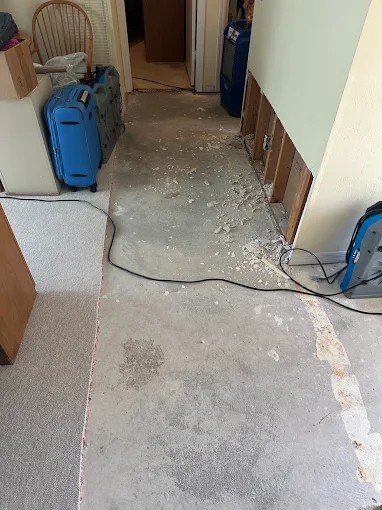
Interior repaints in these two-story homes follow a sequence, and the order matters because skipping ahead is how you end up with flashing through new paint six months later. First comes the walkthrough, where every room gets looked at for texture type, water staining near exterior walls, trim condition, and whether cabinets or doors are part of the scope. Then patching: nail pops, drywall seams that have opened with seasonal humidity swings, caulk gaps at baseboards and crown that have widened over the years. Stains get primed and sealed, not just painted over, because a water stain will bleed straight through two coats of flat latex if it isn’t stopped first. Only then does color go on walls, followed by ceilings if they’re being repainted rather than just touched up, followed by trim and doors last, since trim paint shows every roller mark from the wall work if it goes first.
The price moves at a few specific points in that sequence. Popcorn ceilings that test clear and just need a fresh coat are a different job than ceilings being scraped smooth, which is a different job again than ceilings that need a skim coat after removal. Water staining near the ceiling in rooms along the exterior wall usually means more than a cosmetic fix is needed before paint goes on, which is a conversation worth having before the crew shows up with rollers.
- Inspect the surfaces. Walls, ceilings, trim, doors and cabinets being painted in place are checked for peeling paint, cracks, stains and previous repairs. This inspection helps determine the preparation required.
- Protect the home. Furniture and belongings are moved away from work areas where possible. Floors, fixtures and surfaces that are not being painted are protected. In occupied homes, the work can be organized around access to essential rooms.
- Repair and prepare. Minor drywall damage and nail holes are patched and sanded. Gaps around trim are caulked where appropriate, and stains may require a stain-blocking primer. Bare and repaired areas are primed as needed to support an even finish.
- Apply the paint. The crew paints the agreed surfaces, including walls, ceilings, trim, doors and cabinets in place. Clean lines around ceilings, corners and trim require careful preparation and application.
- Inspect the finish. Painted areas are checked for missed spots, uneven coverage and visible defects that need attention before the space is put back into use.
The wall between the kitchen and family room
This comes up constantly in Tuscawilla floor plans, where the kitchen was built closed off from the family room and almost every current owner wants that opened up. Painting isn’t the obstacle there, the wall is. If it’s load-bearing, which many interior walls in these two-story homes are given how the upper floor’s weight gets carried, that’s a structural decision a licensed contractor needs to make and execute, including whatever permit the opening requires. Iron Site handles everything around that: the patching and finishing once the opening is framed, matching texture across the new edge, and painting the whole space to look like it was never two rooms. We don’t touch the structural piece, and we’ll say so plainly rather than let you find out partway through.
What's slower or more expensive here than you might expect
The honest constraint in Winter Springs is the ceiling texture testing step. It adds time to the front end of a project that homeowners in newer construction elsewhere don’t deal with at all, and it’s not something to rush or skip to save a week. If a test comes back positive, the schedule shifts to accommodate licensed abatement before any painting crew is back in the house, and that’s a real delay worth planning for rather than discovering mid-project. The other cost driver specific to these homes is the two-story foyer and stairwell, where ceiling height alone changes the equipment and time needed compared to a single-story room of the same square footage.
What to have ready before you call
Walk the rooms you’re thinking about and note which ceilings still have original texture versus which have been scraped or skim-coated by a previous owner, since mixed ceilings aren’t unusual in a house that’s changed hands twice. Check corners near exterior walls and under the eaves for staining, especially in rooms that sit under the heaviest part of the oak canopy, since shaded roof sections hold moisture longer and that sometimes shows up as a ceiling stain before it shows up anywhere else. If you’re considering opening the kitchen wall, have a sense of which side of the house that wall runs toward, since it helps frame the conversation about what’s load-bearing before a contractor needs to confirm it. And if the project includes any exterior component down the line, know that most of Tuscawilla and the surrounding associations require architectural review before exterior color changes, even though interior work needs no such approval.
For the full scope of what’s included in an interior painting project, from prep through final coat, the interior painting page covers the general process. For the rest of what Iron Site handles in this part of Seminole County, the property services in Winter Springs page covers the other work that often comes up alongside a repaint in these homes, from drywall repair to flooring.
Walls, trim, doors and cabinets painted in place
Beyond wall and ceiling color, most jobs in this part of Tuscawilla include trim, interior doors, and sometimes cabinets painted in place rather than removed. Trim in these homes has usually been through a few repaints already, which means old paint buildup at hinges and door edges that has to be addressed or the new coat chips at the same points within a year. Cabinets painted in place need a different prep sequence entirely, degreasing before sanding, since kitchen cabinet surfaces carry years of cooking residue that paint won’t bond to otherwise. None of this gets rushed, because the trim and cabinet work is what people notice up close even after the wall color fades into the background.
If you’re looking at a Tuscawilla interior that needs more than a quick refresh, from popcorn ceiling questions to a wall you’re hoping to open between the kitchen and family room, call (386) 345-2852 and we’ll come look at the actual rooms before anything gets scheduled.