
Bathroom Remodeling in Longwood, Florida
A bathroom in the historic district near the old Longwood Hotel was built on dimension lumber and plaster lath before 1920, and a bathroom three miles away in Sweetwater or Wekiva Springs went up in 1975 on a slab with the same cast-iron tub and bubble-glass light fixture it shipped with. Both are calling about the same problem for different reasons, and the person who answers the phone needs to know which decade of Longwood they’re standing in before they can tell you what the job actually costs.
Longwood has the most mixed housing stock in the service area, and it shows up the moment you open a bathroom wall. The frame houses downtown have furring and plaster that behaves nothing like drywall. The custom and semi-custom homes out toward Wekiva and the Springs, many sitting on an acre or more under heavy oak canopy, still have original bathrooms that nobody has touched since the Ford administration: pink or harvest-gold tile, a single vanity light bar, a fan that may or may not actually vent to the outside. Iron Site Property Services handles the vanities, tops, tile, flooring, paint, trim, and fixture swaps that make up most of what that bathroom needs, and it tells you up front the moment something crosses into licensed-trade territory. Call (386) 345-2852 and describe what you’re looking at, and you’ll get a straight answer about which category your bathroom falls into.
What decade your bathroom was built in changes the job
In the historic district, a bathroom remodel usually starts by finding out what’s actually behind the plaster, because a century-old frame house in Longwood has been patched, re-plumbed, and re-wired in pieces over a hundred years and rarely has consistent framing behind the tile. Out in Sweetwater and the Wekiva area, the problem is the opposite: nothing has been touched, which means a 1970s shower pan, a vanity with a plastic laminate top, and a light fixture original to the house. Neither age range is harder to work in than the other, but they fail differently, and the plan has to start with which one you’ve got.
What the job involves and where the price moves
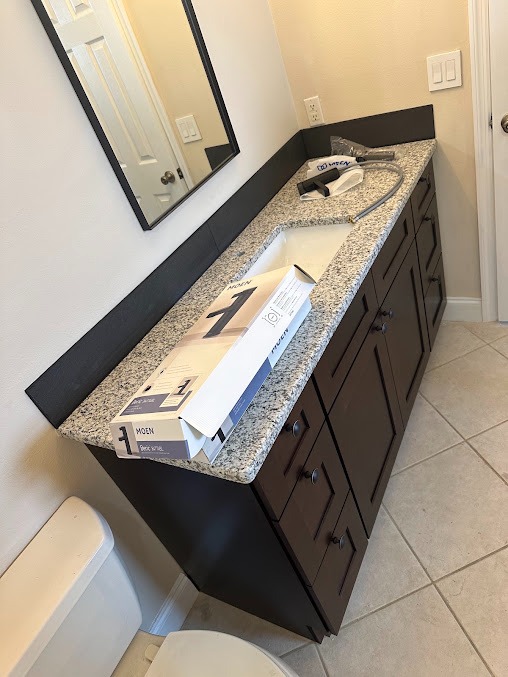
Most bathroom jobs in Longwood start the same way: strip the old vanity, tile, and fixtures down to the studs or furring, check the subfloor and the wall framing for soft spots, then rebuild from there. The single biggest decision point is whether the toilet, tub, and sink stay where they are. Leave the drains and supply lines alone and the job is almost entirely finish work: a new vanity and top, new tile or a waterproofed tub surround, updated lighting, paint, trim, and hardware. Move a drain, relocate a shower to a different wall, or widen a doorway for accessibility, and you’re into slab cutting and a licensed plumber’s scope, which is a different budget and a different timeline entirely. If your current layout already works for you, keeping fixtures in place is the fastest way to control cost.
After layout is settled, the order is roughly: demo, rough-in work by the licensed trade if anything is moving, waterproofing behind the tub or shower surround, tile or flooring, then cabinets, countertop, lighting, mirror, and trim last. Waterproofing is not a step to shortcut. Cement board alone does not keep water out of a wall cavity, and in a climate this humid, a bathroom without a proper waterproof membrane behind the tile and real exhaust ventilation to the outside will grow mildew inside the wall within a year or two no matter how good the tile looks from the shower.
- Vanity and countertop: Replace worn cabinets and tops, confirm measurements and select finishes that fit the existing layout.
- Shower and tile: Assess the existing shower and determine whether the work is limited to finishes or requires a licensed trade to rebuild the shower pan or address plumbing.
- Flooring: Check the existing surface, prepare it appropriately and install the selected flooring.
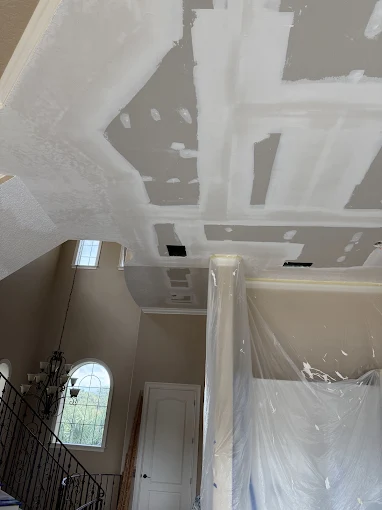
- Drywall and paint: Repair damaged surfaces, finish patches and apply suitable bathroom paint.
- Mirrors, lighting and hardware: Install selected mirrors and cabinet hardware. New wiring or electrical changes must be handled by the appropriate licensed trade.
- Trim and final details: Install agreed trim and complete the finishing work.
What's true in the historic district versus Sweetwater and Wekiva
Near the Longwood Hotel, plaster and lath walls crack and crumble differently than drywall when you cut into them, and the framing behind them is often true to no modern stud spacing at all. That changes how cabinets get hung and how trim gets scribed in. Out in Sweetwater, Wekiva, and the Springs, the recurring issue isn’t the bathroom itself so much as what’s visible from it: these are the homes with cedar or T1-11 exterior siding under heavy tree canopy, and the same moisture and shade that keeps those lots cool year-round is also what rots fascia boards and softens trim at the corners outside. If you’re remodeling the bathroom on an exterior wall in one of these homes, it’s worth having that wall’s exterior condition checked at the same time, because paint that’s lifting on the outside is frequently a sign the substrate underneath it is already gone.
The honest constraint: slab-on-grade and older plumbing
Nearly every bathroom in Longwood outside the oldest frame homes sits on a concrete slab with no crawlspace underneath it, which means any decision to relocate a drain or move a fixture more than a few inches means cutting the slab open, running new line, and patching it back. That’s the single biggest cost fork in this market, and it surprises people who assume a bathroom remodel is mostly about tile and cabinets. The honest answer is that if your current fixture locations already work for your household, leaving them exactly where they are and spending the budget on finishes instead will get you a dramatically different-looking bathroom for a fraction of what a layout change costs.
What to check before you call
Walk your bathroom and look at three things first. Press on the flooring around the base of the toilet and the wall just outside the tub or shower; soft or spongy spots usually mean water has been getting behind the surface for a while. Turn on the exhaust fan and hold a tissue near the vent cover to see if it’s actually pulling air, since a fan that runs but doesn’t vent outside is doing nothing for the humidity. And take a look at whether your vanity light, any recessed cans, and the exhaust fan itself look original to the house, because in a 1970s or 1980s Sweetwater or Wekiva home, they usually are, and replacing dated fixtures is often the single change that makes a bathroom feel current without touching a pipe.
What Iron Site handles and what goes to a licensed trade
Iron Site Property Services does the vanity and countertop installation, tile and backsplash work, LVP or tile flooring, paint, trim and casing, mirror and lighting installation, cabinet hardware, and like-for-like fixture swaps that stay on the existing drain and supply line. When a job calls for moving a drain, rebuilding a shower pan, running new electrical for a vanity light upgrade, or altering a wall, that portion goes to the licensed trade doing that work, and they’re the ones who pull the permit for it. Iron Site coordinates the schedule so the finish crew isn’t standing around waiting on inspections, and so the plumber or electrician isn’t working around half-finished tile. You can see the full scope of what that finish work covers on the bathroom remodeling page, and if you want to know more about the kind of work done around Longwood specifically, the Longwood service area page lays out the rest of what’s offered in the city.
- List the items you want replaced, including the vanity, countertop, shower tile, flooring, mirror, paint and trim.
- Decide whether the toilet, sink and shower will remain in their existing positions.
- Take photos of the bathroom, including visible damage and areas where mildew returns.
- Measure the room and vanity area if possible.
- Note whether the exhaust fan works and whether the room stays damp after showering.
- Gather any finish selections you have already made.
Whether you’re dealing with original plaster near downtown Longwood or a bathroom in Sweetwater or Wekiva that hasn’t changed since it was built, the starting point is the same: a look at what’s actually there before anyone talks about layout or budget.
Next step
Call (386) 345-2852 or reach out through Iron Site Property Services to set up a free estimate, and describe your bathroom’s age and whether you’re planning to keep fixtures where they are. That one detail determines most of what happens next.