
Junk Removal and Property Cleanouts in Sanford, Florida
Walk into a 1950s block ranch off French Avenue and the junk problem is almost never in the living room. It is in the garage, stacked to the rafters because nobody ever added real attic access, and it is under the carport where fifty years of a family’s overflow has nowhere else to go. Walk into a bungalow in the historic district and the problem is the opposite: tight original closets, a cramped under-house crawlspace that was never meant to store anything, and a century of accumulated furniture nobody can get down the narrow original staircase without taking a door off its hinges.
Sanford’s housing stock runs from 1900s frame construction downtown through 1950s to 1970s concrete block north and west of the center, out to newer 1990s-and-up construction toward Lake Mary Boulevard and the 417. Each one moves differently when it comes time to clear it out, and a lot of the calls we get in Sanford come from landlords and small investors turning over a rental near Seminole State College or the SunRail corridor, where the clock on a vacancy matters more than it does for a homeowner clearing out a garage on their own schedule.
If you are staring at a property that needs to be emptied before a listing, a new tenant, or a closing, the next step is a walkthrough so we can scope the job and give you a real number instead of a guess.
What drives a Sanford cleanout differently than most of Central Florida
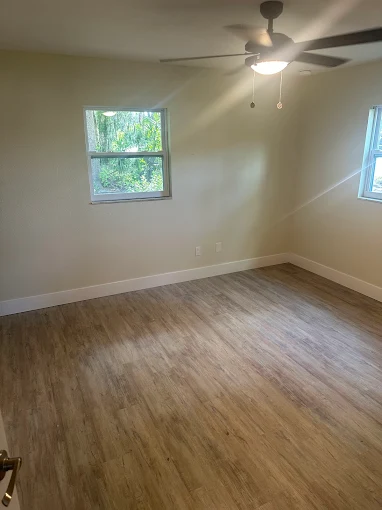
Sanford has one of the higher concentrations of small investor landlords in this part of Seminole County, and that changes what a typical cleanout looks like here compared to an owner-occupied subdivision. A lot of our calls are turnover jobs: a tenant has left behind furniture, mattresses, kitchen contents and closet debris, and the property manager or owner needs the unit emptied, cleaned out and ready for photos before the next lease starts. That work has to move fast, because every day the unit sits full is a day it cannot be shown or re-rented.
The second driver is the age split in the housing stock itself. Block ranches built from the 1950s through the 1970s tend to have oversized garages that became default storage for decades of accumulation, plus attic space that is often inaccessible without pulling down a ladder and a lot of insulation disturbance. Downtown, the frame houses and bungalows from the early 1900s have smaller footprints, narrower stairs and hallways, and original construction that makes moving large furniture out a different physical problem than it is in a modern three-car-garage subdivision near the 417.
What the job actually involves, and where the price moves
A cleanout starts with a walkthrough, in person or from photos if you are an out-of-area owner or heir, where we look at volume, access and anything that needs special handling. From there the scope usually breaks down into a few decision points that move the price:
- Volume versus access. A garage packed floor to ceiling in a 1960s block ranch with a standard two-car door is straightforward. An attic cleanout where everything has to come down a pull-down ladder one box at a time, or a downtown bungalow where furniture has to be walked through a narrow original hallway, takes longer for the same volume and the price reflects that labor.
- Disposal versus donation. Usable furniture and appliances can often be donated rather than hauled to the landfill, which we will flag during the walkthrough. Anything that cannot be reused, including water-damaged items common in long-closed-up Florida garages and sheds, gets disposed of properly.
- Hazardous or regulated items. Paint cans, old chemicals, propane tanks and similar items turn up often in garages that have been accumulating since the 1970s or 1980s, and they cannot go out with regular hauled debris. We identify these during the walkthrough so there are no surprises on cleanout day.
- Sorting requirements. Estate cleanouts and tenant leave-behinds sometimes need items sorted before removal, in case family members or the former tenant need to claim something. That sorting step adds time and we build it into the scope up front rather than discovering it mid-job.
Once the scope is set, the crew clears the space in the order that makes sense for the property, interior rooms first in most homes, garage and attic last since those are usually the highest-volume areas, and the space gets left broom swept.
How the Junk Removal Process Works
Identify the items to remove.
Walk through the property and identify the furniture, appliances, boxes, debris, and other belongings that need to go. For estate cleanouts or properties with tenant leave-behinds, confirm that you have permission to approve disposal. Set aside important documents, valuables, and personal possessions before the work begins.
Review the volume and access.
A few items near an accessible entrance require less handling than a packed attic or a shed filled with mixed belongings. Stairs, narrow doorways, long carrying distances, and limited loading access can increase the labor involved.
Confirm the estimate.
Iron Site Property Services reviews the requested work before removal begins. Explain whether the job includes a garage, attic, shed, yard debris, or multiple rooms. Additional areas or unexpected quantities can change the scope and cost.
Remove the approved belongings.
Once the scope is agreed upon, removal follows the plan. Clearly identify anything that must remain, especially when family members, landlords, tenants, or property representatives are involved.
Review the cleared areas.
After removal, check the spaces included in the job. If you are preparing for renovation, cleaning, or a property listing, identify any remaining debris and visible damage before scheduling the next stage.
The constraint that catches people off guard here
The thing most Sanford property owners underestimate is attic volume in the older block ranches. These houses were built with minimal attic access by today’s standards, often a single pull-down ladder and a crawl space with low clearance and no flooring over the joists. Decades of stored holiday decorations, old documents and furniture that got shoved up there and forgotten add up to real weight and real time to bring down safely, one trip at a time, without damaging the ceiling drywall underneath or stepping through to the room below. People expect an attic cleanout to take an hour. In a house that has been accumulating since the Johnson administration, it rarely does, and that is the single biggest reason an estimate for a block ranch runs longer than the homeowner expected going in.
- Volume: A single-item pickup differs from clearing a full garage, attic, or house.
- Item type: Furniture, appliances, household belongings, and mixed debris may require different handling or disposal arrangements.
- Sorting: Separating items to keep from those to discard takes additional time.
- Access: Stairs, tight spaces, long carrying distances, and loading limitations can increase labor.
- Property condition: Deteriorated boxes, dusty storage areas, and moisture-affected belongings can make removal slower.
What to have ready before you call
A faster, more accurate estimate comes from a little prep on your end before the crew shows up. Walk the property and take note of which rooms, the garage, the attic, and any exterior storage like a shed or lanai need to be cleared. If it is a tenant leave-behind or estate situation, have a rough sense of whether anything needs to be set aside for family members or the former occupant before it is hauled. If the property is in the historic district, know that the cleanout itself does not require Historic Preservation Board involvement since nothing about the exterior changes, but any repainting or visible repair work that follows will. And if you are an out-of-area owner, a few clear photos of the worst rooms help us scope the job close to accurately over the phone.
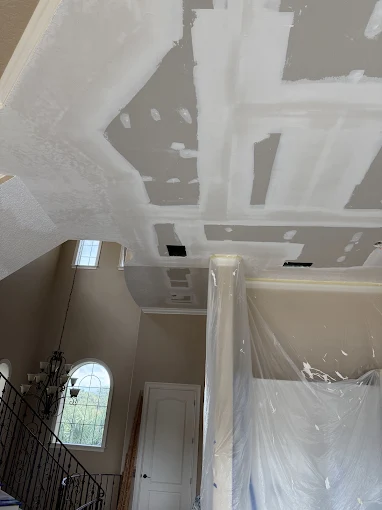
Cleanouts are often the first call on a property that needs more work behind it, torn drywall once furniture clears a wall, popcorn ceiling that has never been touched, flooring that has been hidden under decades of storage. Our junk removal and property cleanout services cover the full range from a single appliance pickup to a whole-house clearout, and once the space is empty we can walk it with you and talk through what the paint, drywall or flooring work looks like next.
- The rooms, garage, attic, shed, or exterior areas that need clearing.
- The types and approximate quantities of items to remove.
- Any bulky furniture or appliances that require additional handling.
- Items that must stay or need to be sorted first.
- Access arrangements and your plans for the property after removal.
Where this fits with everything else on the property
A lot of Sanford cleanouts turn into a second conversation once the space is clear. Landlords clearing a turnover often find drywall damage behind furniture, baseboards that need replacing, or a tired coat of paint that has gone through three or four tenants without a refresh. Heirs clearing an estate house downtown sometimes uncover original heart pine floors worth keeping, or plaster walls that need patching before a sale. Either way, having the same crew that cleared the property also handle the follow-up work means one point of contact instead of coordinating a hauling company and a separate repair crew on different schedules. You can see the full range of what we handle on our property services in Sanford page, from the cleanout itself through painting, flooring and rental turnover work.
Ready to get a property cleared
Whether it is a garage that has not seen the floor in a decade, a tenant leave-behind that needs to be ready for photos this week, or an estate house downtown that needs sorting and clearing before a sale, the first step is the same: a walkthrough so we can see what we are dealing with and give you a straight scope. Call Iron Site Property Services at (386) 345-2852 for a free estimate on your Sanford cleanout.