
Drywall Repair and Replacement in Winter Springs, Florida
Most of Tuscawilla went up in the 1980s and 1990s under oak trees that were already decades old, and those trees have spent thirty-plus years pushing humidity, root movement and shade onto the block-and-stucco homes underneath them. That combination of age and canopy is why so many Winter Springs homeowners find themselves staring at a stress crack over a door, a water-stained ceiling patch from a leak that got fixed last year but never got patched, or an interior wall they want gone so the kitchen finally opens into the family room.
On the exterior walls in these homes, the drywall is not hung on wood studs with open cavities behind it. It is screwed or glued to furring strips running over concrete block, which means there is no cavity to fish a cable through and no stud bay to key a patch into the way a framer up north would expect. A drywall patch on one of these walls has to be anchored back to the furring strip itself or it will telegraph a seam no matter how well it gets floated. That is a different job than patching a stick-built interior wall, and it is one more reason to have someone look at it who has actually worked on Tuscawilla’s block construction before, not just drywall in general.
If you are looking at a crack, a stain, or a wall you want opened up, the next step is getting eyes on it before you guess at the scope.
What drives drywall damage in Winter Springs homes
The oak canopy over most of Tuscawilla does more than drop leaves and acorns on the roof. It keeps the north and east sides of these houses shaded for most of the day, which slows down drying after rain and overnight dew. That moisture works its way into stucco and block on the shaded elevation, and over enough years it shows up inside as hairline cracking around window and door openings, corner bead that has started to separate, or soft spots in drywall near an exterior wall that has been taking on moisture from outside for longer than anyone noticed.
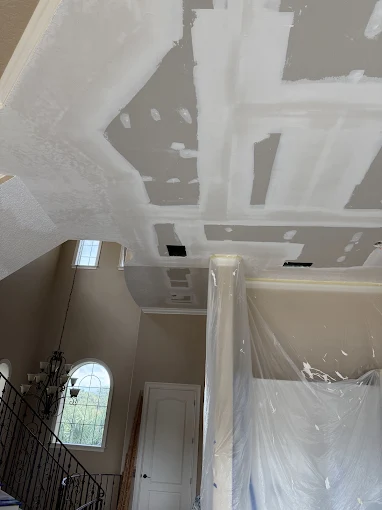
The other driver is age. A two-story 1980s or 1990s Tuscawilla house has settled for thirty-plus years, and that settling shows up as stress cracks at door heads, at the corners of windows, and at the seam where a two-story foyer wall meets a lower ceiling. None of that is a structural emergency on its own, but it is the kind of crack that comes right back if it gets skim-coated without addressing why it opened up in the first place.
Patching an exterior wall over furring strips
When the damage is on an exterior wall, the first thing that gets checked is what is actually behind the drywall. In a Tuscawilla block home, that is almost always vertical furring strips, not studs, and a patch has to be screwed into those strips or into added blocking to hold long term. Skip that step and a patch looks fine for a few months and then starts to flex and crack along its edges, which is a common complaint with quick drywall repairs done by someone unfamiliar with how these houses are actually built.
This is also where the job slows down compared to patching an interior wall. There is no cavity to work through, so running anything behind that wall, or even confirming there is nothing already running through it, takes more care. If a patch is going in near an exterior electrical box or anything involving wiring, that part of the work belongs to a licensed electrician and Iron Site Property Services coordinates the drywall repair around that work rather than touching it directly.
- Identify what needs to go. Walk through the rooms, garage, attic, shed and other storage areas. Separate unwanted furniture, appliances, boxes and household clutter from belongings you intend to keep. This helps establish the actual scope of the job.
- Assess access and handling. A large item near an accessible entrance may be straightforward to remove. Bulky furniture in an attic, heavy appliances or items stored behind other belongings can require more time. Stairs, narrow doorways, limited parking and longer carrying distances can also affect the work.
- Determine the size of the cleanout. Removing a few items from one room differs from emptying a garage or preparing an entire property for new occupants. The amount of material, the number of areas involved and the type of items all influence the workload.
- Discuss the estimate. Describe the items and areas involved, including any access challenges or unusual handling requirements. Photos can help communicate the scope before an estimate is arranged.
Water-stained ceilings after the leak is already fixed
A fair number of calls in this part of Winter Springs come after the actual leak, whether it was a roof flashing issue, an AC condensation line, or a plumbing fixture upstairs, has already been repaired by someone else, and now there is a brown ring on the ceiling that needs to go away. That is a straightforward repair: the stained section gets cut out or sealed with a stain-blocking primer, new drywall or joint compound goes in, and texture gets matched before paint. The one thing that has to happen first, every time, is confirming the source is actually fixed. Painting over a stain that keeps getting fed from above just hides the problem until it comes back bigger.
Texture matching on 1980s and 1990s ceilings
Most Tuscawilla homes have some version of a sprayed or hand-applied ceiling texture, and matching it is as much a part of the job as the patch itself. A repair that is structurally perfect but obviously smoother or rougher than the surrounding ceiling is still a visible repair. Matching knockdown or orange peel texture by hand takes practice and the right tools, and it is usually the difference between a patch that disappears and one that draws your eye every time you walk into the room.
If the home was built before the mid 1980s and still has its original ceiling texture, that texture gets tested before any sanding, scraping or disturbance happens. A positive asbestos result means the work shifts to a licensed abatement contractor, not a drywall crew with a spray bottle. Plenty of homes in this area sit right around that construction cutoff, so this step does not get skipped based on a guess about the build date.
Opening up the wall between the kitchen and family room
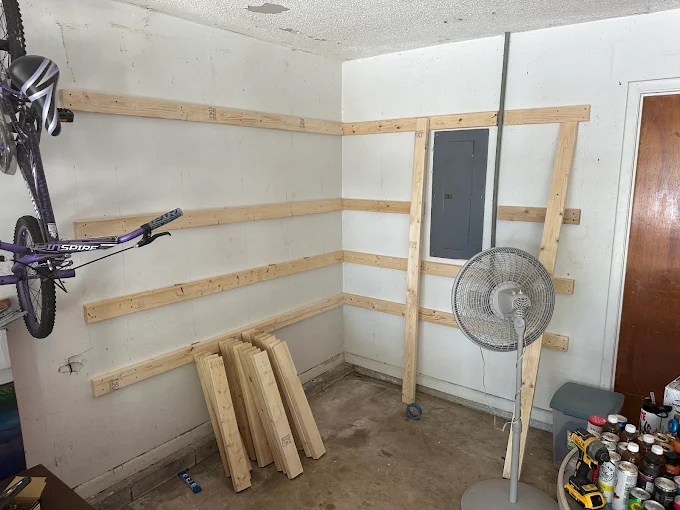
The floor plan that shows up over and over in Tuscawilla is a two-story foyer, a formal dining room that rarely gets used, and a kitchen that was built closed off from the family room, a very 1980s and 1990s layout choice that most current owners want to undo. Taking that wall down changes the whole feel of the downstairs, but the first question has nothing to do with drywall: is that wall load-bearing.
If it is, a licensed contractor needs to evaluate the framing, size a header if one is needed, and pull the permit for the structural change. Iron Site Property Services does not move load-bearing walls and does not pull that permit, and says so plainly rather than quietly working around it. What Iron Site Property Services does handle is everything on either side of that structural decision: patching and finishing the drywall where the wall used to be, matching texture across what is now one continuous ceiling, repainting the combined space, and keeping that part of the project moving on schedule while the structural trade does its piece. For a full renovation of the kitchen side of that space, the drywall repair and replacement work is usually just one piece of a larger scope that also touches paint, trim and flooring.
Where the cost actually moves
A small nail-pop or corner crack repair is quick work. The price moves once a job involves matching an unusual texture, patching an exterior wall anchored to furring strips instead of open studs, or repairing a section large enough that blending new drywall into old without a visible seam takes real time. It also moves if termite damage turns up once a section of wall comes off, which happens occasionally in homes this age, and the honest answer at that point is to stop, show you what was found, and talk through it before anything gets closed back up. Nobody wants a surprise line item, and nobody wants it hidden either.
- Make a list of unwanted items. Identify the furniture, appliances, boxes and other belongings that need to be removed.
- Check each area. Look through the garage, attic, shed, spare rooms and outdoor storage spaces so the full scope is clear.
- Review access. Note stairs, narrow doorways, gates, parking limitations and obstacles between the items and the pickup location.
- Take photos. Pictures of the largest items and each area can help communicate the amount of material involved.
- Identify special handling needs. Mention unusually heavy items, mixed debris or materials that may require separate disposal arrangements.
- Consider the next stage. If the property needs painting, flooring installation, cleaning or repairs after the cleanout, explain your intended schedule.
What to check before you call
Confirm whether any leak behind a stain has actually been repaired, since that changes the whole approach. Take note of roughly how long a crack has been there and whether it has gotten worse, since a crack that is actively growing gets looked at differently than one that has been stable for years. If you are dealing with a wall you want removed, it helps to know whether it has outlets or switches on it, since that affects how the electrical trade’s portion of the job gets sequenced around the drywall work. If you are also planning exterior paint while a patch is being done, keep in mind that most Winter Springs associations, including the ones across Tuscawilla, require architectural approval for exterior color changes, so that approval is worth starting early even though it has nothing to do with the interior repair itself. For more on how all of this fits together for homes in this specific part of Seminole County, the property services in Winter Springs page covers the full range of work available here.
Get the damage looked at
A crack, a stain or a wall you want gone does not get smaller or simpler by waiting on it, and in a shaded, older Tuscawilla house, moisture-related damage tends to spread quietly before it becomes obvious. Call Iron Site Property Services at (386) 345-2852 for a free estimate and a straight answer on what the repair actually involves and where the structural or electrical trades need to be brought in.