
Drywall Repair and Replacement in Orange City, Florida
A good share of Orange City went up decades ago as block homes built for retirees, and a lot of those same owners are still in them, which means the drywall work here looks different than it does in the newer subdivisions to the south. The calls we get are less about style and more about function: a doorway too narrow for a walker, a tub someone can no longer safely climb into, a wall that needs real blocking behind it before a grab bar goes in.
The other steady stream of work comes from families handling a parent’s house after it sells or before it lists, often managing the whole thing from out of state. Between the two, the drywall jobs we do in Orange City tend to be less cosmetic and more about getting a house ready for a different stage of life, one way or the other.
If either of those sounds like your situation, read on for what actually drives the scope and the cost, then call Iron Site Property Services at (386) 345-2852 for a free estimate.
What's actually behind the drywall here
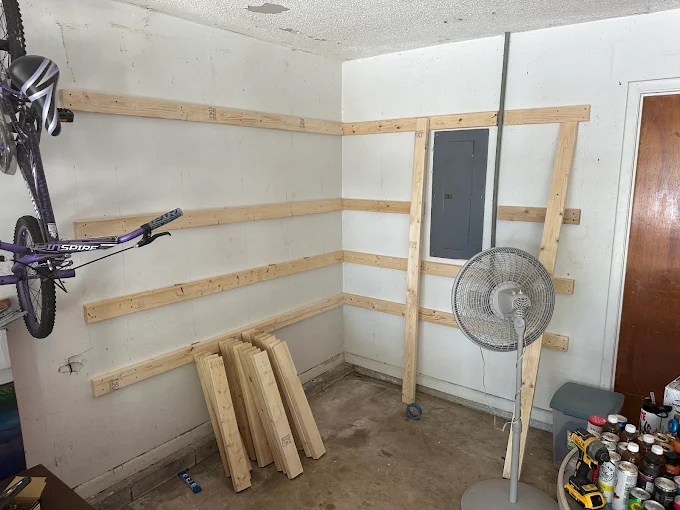
Orange City’s older housing stock is almost entirely concrete block with stucco on the exterior, which means the interior side of every exterior wall is built differently than a typical stick-frame house up north. There’s no open stud cavity. Instead you’ve got furring strips, thin wood strips fastened directly to the block, with drywall screwed to those strips and a gap behind it rather than solid framing.
That changes how we approach even a simple patch. You can’t just screw a repair piece wherever you want, because there might be nothing but block and air behind part of that wall. It also matters a great deal if you’re adding a grab bar, a handrail, or anything else that needs to carry real weight. On a furred-out block wall, blocking has to be added correctly, anchored into the strips or sistered against the block itself, or the hardware will eventually pull straight out of the drywall. We see this get missed in houses where someone installed a bar themselves or had it done quickly, and it’s one of the more common reasons we get called back into a bathroom that was supposedly already handled.
Aging-in-place drywall work: what it involves and where cost moves
Widening a doorway for a walker or wheelchair usually means removing the drywall on both sides of the opening, assessing whether the wall is load bearing, and in many Orange City homes finding out whether that wall is block furred out or an interior stud partition. Interior partitions are typically the easier and less expensive path. If the opening needs to move within a block wall, or if there’s wiring or plumbing inside it, that part of the job gets handed to the licensed trade that handles it, and we coordinate the drywall patching and finish work around their schedule so the project doesn’t stall.
Curbless shower conversions and grab bar installations follow a similar pattern. The drywall comes out around the tub or shower surround, we check what’s behind it, add blocking where it’s needed, and close it back up with moisture-appropriate board in the wet zone. The decision point that moves price the most is almost never the drywall itself, it’s whether the existing plumbing stays exactly where it is. Keep the drain and supply lines in place and you’re looking at a patch-and-refinish job. Relocate them and you’re into slab cutting, which is a different scope and a different trade entirely.
- Identify what needs to go. Walk through the rooms, garage, attic, shed and other storage areas. Separate unwanted furniture, appliances, boxes and household clutter from belongings you intend to keep. This helps establish the actual scope of the job.
- Assess access and handling. A large item near an accessible entrance may be straightforward to remove. Bulky furniture in an attic, heavy appliances or items stored behind other belongings can require more time. Stairs, narrow doorways, limited parking and longer carrying distances can also affect the work.
- Determine the size of the cleanout. Removing a few items from one room differs from emptying a garage or preparing an entire property for new occupants. The amount of material, the number of areas involved and the type of items all influence the workload.
- Discuss the estimate. Describe the items and areas involved, including any access challenges or unusual handling requirements. Photos can help communicate the scope before an estimate is arranged.
Estate and cleanout drywall work
When a house is being prepared for listing after a parent moves on or passes away, drywall problems tend to surface that nobody’s dealt with in years: old ceiling stains from a roof leak that was fixed long ago, cracked corners from decades of settling, nail pops that were never addressed, holes behind furniture that’s finally being moved out. None of this is urgent in the way an active leak is, but it all needs to be resolved before a buyer walks through or a listing photo gets taken.
The practical approach is to walk the whole house in one pass, patch everything that needs it, match texture so repairs don’t show under listing lighting, and get paint on afterward so the whole place reads as cared for rather than patched. We fold this into the broader cleanout and turnover work we do for families and for the agents and property managers who represent them, which is covered in more detail on our full drywall repair service page.
What a water-stained ceiling actually needs
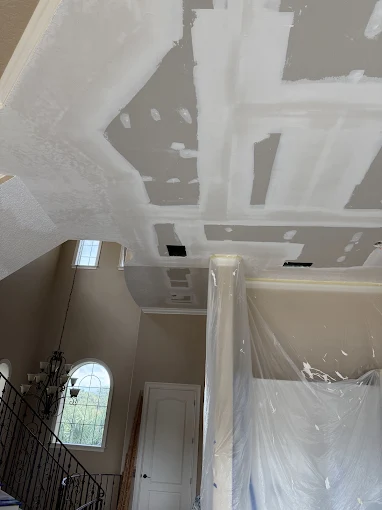
A brown ring on a ceiling almost never means the drywall itself failed. It means water got into it from somewhere above, usually a roof penetration, an AC condensate line, or in a two-story a plumbing issue on the floor above. By the time it reaches us, the leak itself has typically already been fixed by whoever handles that trade. Our job is to confirm the area is actually dry, not just dry-looking, cut out any drywall that’s gone soft or delaminated, and replace it rather than paint over it, because paint over wet drywall just reappears a few weeks later.
Texture matching matters more on ceilings than almost anywhere else in the house. Orange City has a lot of older popcorn ceilings, and on anything built before the mid-1980s, that texture gets tested before any of it comes down. If the test comes back positive, that part of the job goes to a licensed abatement company, not a scraper and a spray bottle. Once the ceiling is clear to work on, we match whatever texture is there, whether it’s popcorn, knockdown, or smooth, so the repair doesn’t sit there as a visible patch for the next ten years.
The honest constraint: furred-out walls slow everything down
Here’s the part that catches people off guard. On a stick-built house, a drywall patch is often a same-visit job: cut the damaged section back to the nearest studs, screw in new board, tape, mud, texture, paint. On Orange City’s furred-out block walls, every one of those steps takes longer because there’s less to anchor to and less room to work with behind the surface. Locating solid backing, adding blocking where fixtures need to hang, and making sure a patch doesn’t flex against the block takes more time than the same repair would on open stud framing. It’s not a reason to avoid the work, it’s just the reason a quote for a block-wall patch runs a bit longer than the same job quoted for a house in a newer stick-frame subdivision.
What to check before you call
Before reaching out, it helps to know a few things about the room in question. Is the wall you’re asking about an exterior wall, likely block with furring strips, or an interior partition, more likely standard framing? Has there been any water history in that spot, even old and already resolved? And if this is a mobility or accessibility project, do you know roughly where you want fixtures or grab bars positioned, since that determines how much blocking needs to go in and where. If you’re managing a property from out of state, a few clear photos of each affected wall or ceiling, along with the general age of the house if you know it, lets us scope the visit more accurately before anyone drives out. You can see more about the areas we cover, including the work we do throughout Orange City, before you reach out.
- Make a list of unwanted items. Identify the furniture, appliances, boxes and other belongings that need to be removed.
- Check each area. Look through the garage, attic, shed, spare rooms and outdoor storage spaces so the full scope is clear.
- Review access. Note stairs, narrow doorways, gates, parking limitations and obstacles between the items and the pickup location.
- Take photos. Pictures of the largest items and each area can help communicate the amount of material involved.
- Identify special handling needs. Mention unusually heavy items, mixed debris or materials that may require separate disposal arrangements.
- Consider the next stage. If the property needs painting, flooring installation, cleaning or repairs after the cleanout, explain your intended schedule.
Whether this is a grab bar that needs real blocking behind it, a stained ceiling left over from a leak someone else already fixed, or a full walk-through before a house goes on the market, the scope depends on what’s actually behind that wall, and that’s worth a look before anything gets estimated over the phone.
Call Iron Site Property Services at (386) 345-2852 for a free estimate, or reach out through our full drywall repair service page to describe what you’re seeing and get a visit scheduled.