
Commercial Cleaning in Volusia and Seminole Counties
The last cleaner stopped showing up on the nights they said they would, or the restrooms were fine and the floors were not, and now you are the one walking the suite at 7 a.m. looking for what got missed. Or the buildout finished on Friday, the tenant moves in Monday, and every surface is coated in drywall dust.
Iron Site Property Services handles recurring janitorial for offices, medical and dental suites, retail, restaurants and small industrial space, plus one-time construction cleans and post-tenant cleans. The goal is a building that gets cleaned the same way every visit, without you having to follow up.
What the work looks like, start to finish
Every account starts with a walkthrough, not a quote sent by email. Somebody walks the space with you, looks at the floors, counts the restrooms, finds the supply closet and the alarm panel, and asks how the space is actually used. The scope is then written down, room by room and task by task, so everyone knows what a visit includes.
A routine visit runs in a set order, because the order is what keeps a space from being cleaned twice:
- Trash and liners come out first, including the break room and restroom bins.
- Dusting goes high to low: ledges, shelving, desks, then door handles and switch plates.
- Restrooms are cleaned next: fixtures, mirrors, partitions, dispensers restocked, and the floor last.
- Break rooms and kitchenettes follow: counters, sinks, table tops, appliance exteriors.
- Floors are done last, dry first with vacuum or dust mop, then wet, working back toward the exit.
- Lights, locks and the alarm are set the way you specified, and anything unusual is noted for you.
The first visit on a recurring account is usually heavier than the ones after it. Baseboards, vent faces, door tracks and corners that have gone months without attention get a reset so routine visits can stay routine.
- Construction cleans run in stages. A rough clean after drywall and paint removes debris and the bulk of the dust. A final clean comes after the trades are out and covers glass, tracks, vents, fixtures, cabinet interiors and floors. Stickers, tape residue and paint specks get attention at the end, because that is what the new tenant sees first.
- Post-tenant cleans take a space back to rentable. Leftover furniture and trash can be hauled out through our junk removal service, and the cleaning follows once the space is empty. Landlords, property managers and realtors tend to use this one between leases.
What moves the price, and why
- How often. Five nights a week keeps soil from building up, so each visit is lighter. Once a week means more to do on each visit and more spread between visits.
- Restroom count and fixture count. Restrooms are the most labor per square foot in any building. Two single-user restrooms are a different job than two multi-stall ones.
- Floor types. Carpet, sealed concrete, tile and resilient flooring each need different methods and different time. Carpet that needs extraction is separate from carpet that needs vacuuming.
- Who is in the space and when. An office that empties at 5 p.m. is simple. A restaurant that closes at midnight, or a dental suite that opens at 7, narrows the window and changes the crew’s schedule.
- What the space does. Restaurant kitchens carry grease and floor drains. Medical suites carry stricter surface routines. Retail carries glass and fingerprints. Each changes the task list.
- Starting condition. A well-kept space needs maintenance. A space that has been neglected needs a reset first, and that reset is priced separately from the routine.
- Glass and entry. Storefronts, double doors and long glass lines add time quickly, and the entrance is the first thing a customer sees.
- Supplies. Paper goods, soap and liners can be supplied by you or by us. Say which, because it changes the number.
- Access. Keys, fobs, alarm codes, elevator rules and loading dock hours all affect how a visit runs. Written access terms keep it predictable.
Doing this work in Central Florida buildings
- Block and slab. Most commercial space built here before 2000 is concrete block on a slab, often with painted or stuccoed walls. Floors are frequently sealed concrete, terrazzo or vinyl tile laid directly over the slab. Slabs take on and release moisture all year, and many older ones went down without a vapor barrier. That shows up as tile edges lifting, grout lines staining and a musty smell in the corners of a suite that has no obvious leak. Cleaning methods need to respect that, using controlled water on tile and sealed concrete and not flooding a floor that is already damp from below.
- Humidity. Mildew starts in restrooms, janitor closets and storefront corners where air does not move. Exhaust fans that are weak or off, and AC systems that run cold and wet, leave film on mirrors, black ghosting around supply vents and gray growth on shaded grout. The fix is regular attention to those spots, and a note to you when the cause is airflow rather than dirt.
- Sand, pollen and afternoon storms. Entry floors take the worst of it. Sand tracks in and scratches finishes, pollen coats counters and window sills, and a summer storm puts water on every entry mat in the county for twenty minutes. Entry areas get cleaned and dried the way a high-traffic zone needs, not the way an interior hallway does.
- Sun and glass. Direct sun shows every smear on storefront glass. Sprinkler overspray from irrigation leaves mineral spotting and sometimes rust-colored stains that ordinary glass cleaner will not lift. Ground-level and interior glass are part of our work.
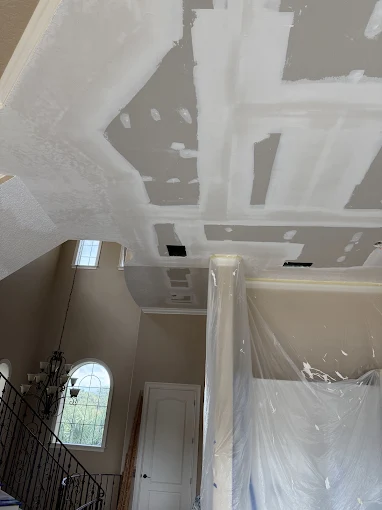
- Older stock. Suites in Sanford, Deltona and the older parts of Orange City often have popcorn ceilings, which collect dust and cobwebs. In anything built before the mid 1980s that texture should be tested before anyone scrapes or wets it. We dust it lightly where it is sound, and if the texture is flaking or falling, we stop and tell you so it can be tested.
A common misconception about commercial cleaning
Many people assume cleaning is priced by square footage, so a bigger number means a higher bid and a lower bid means a better deal. In practice, two 3,000 square foot suites can take completely different amounts of time. One is an open office with carpet and one restroom. The other is a dental suite with six operatories, hard flooring, two restrooms and a sterilization area.
A very low bid on a suite like the second one usually means less time in the space, and less time means things get skipped. Compare the written scope line by line, not the total.
One boundary to note. We clean medical and dental suites at the surface level. Clinical disinfection protocols, sharps and regulated medical waste stay with the practice and its own medical waste vendor.
What to have ready before the estimate
- The address, the type of space and the approximate size.
- How many restrooms, break rooms and separate offices or rooms there are.
- The hours the space is empty and the hours it is in use.
- How often you want service and what you are paying for now, if anything.
- How the crew gets in: keys, fob, alarm code, lockbox or front desk.
- Any requirements from your landlord or property manager for vendors working in the building.
- A short list of what has gone wrong with past cleaning, so it goes into the scope.