
LVP and Vinyl Plank Flooring Installation in Orange City, Florida
Orange City’s housing stock skews older than almost anywhere else Iron Site Property Services works, and a large share of it sits inside 55 and over communities where the original flooring has never been replaced. That means the call is rarely just about picking a plank color. It’s about a tub that’s gotten dangerous to step into, a hallway too narrow for a walker over worn carpet edges, or a family clearing a parent’s house on a closing deadline with old sheet vinyl and tack strip still down.
Vinyl plank flooring installation in Orange City almost always starts underneath whatever is currently on the floor, and what’s down there, not the plank itself, is usually what decides the cost. Call Iron Site Property Services at (386) 345-2852 for a free estimate, and have a rough sense ready of what’s currently on each floor before you do.
What's Actually Under the Floor in Orange City Homes
A lot of Orange City’s housing went up between the 1960s and 1980s, and what’s on the floor today is a record of that era. You’ll find original ceramic tile in kitchens and baths, terrazzo in some of the older ranch-style homes near the center of town, sheet vinyl glued directly to the slab, and carpet over tack strip in bedrooms and living areas that’s been replaced once or twice since.
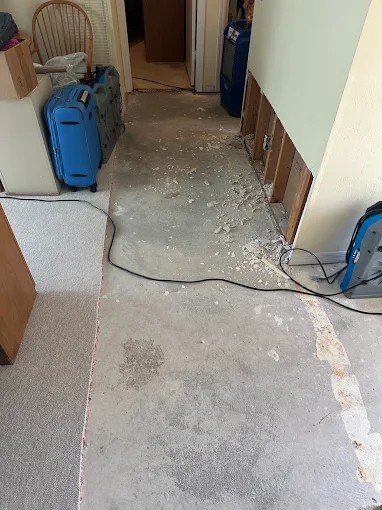
Each of those comes up differently, and each one changes the labor side of the estimate. Terrazzo and ceramic tile have to be broken out and hauled off, which is slow, dusty work. Sheet vinyl glued straight to concrete, especially anything installed before the 1980s, sometimes has backing material that needs careful handling rather than just being ripped up. Carpet and tack strip come up fast, but staples and adhesive residue left behind still need to be dealt with before a new floor goes in. We look at what’s currently down before we talk about what’s going on top of it, because that’s where most of the price difference lives.
Why the Slab Comes First, Every Time
Central Florida slabs take on and give off moisture year-round, and a meaningful number of homes in this part of Volusia County were poured without a vapor barrier underneath. That’s the single biggest reason a vinyl plank floor fails here: moisture pushing up through the concrete gets trapped under a sealed floating floor or a glue-down plank, and within a year or two you’ve got lifting seams, a musty smell, or planks that cup at the edges.
Before any plank goes down, we check slab moisture levels. If a slab tests high, that doesn’t mean the job stops. It means the approach changes, usually with a moisture mitigation step or a product rated for higher moisture conditions, built into the plan before installation day rather than discovered after the floor is already down.
The Honest Constraint: Removal Is the Job, Not a Line Item Before It
Homeowners usually call expecting the quote to be about the vinyl plank itself: the material, the click-lock or glue-down labor, the square footage. In Orange City specifically, that’s often the smaller half of the number. A house with original terrazzo or ceramic tile in three rooms takes longer to demo than it does to float a new floor over the cleared slab, and that labor has to be priced honestly up front rather than treated as a surprise add-on once the old flooring is already torn up. If a home has had any prior leak or known moisture issue, that gets factored in before day one, not discovered halfway through.
Vinyl Plank and Aging in Place
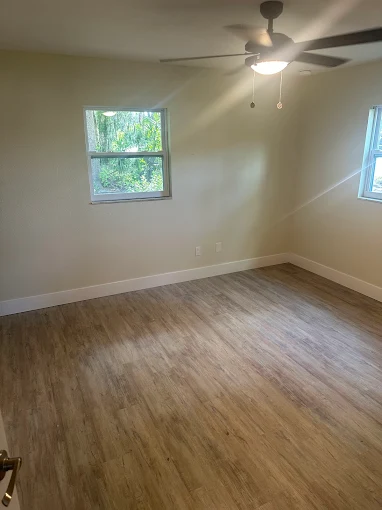
With so much of Orange City’s population in 55 and over communities, a good share of the flooring calls here aren’t about updating a look. They’re about safety. Carpet edges and raised tile thresholds are trip hazards for anyone using a walker or dealing with balance issues, and a flat, continuous vinyl plank floor with properly finished transitions removes most of that risk in one pass. We’ll also talk about wear layer thickness in these conversations, since a thicker wear layer holds up better under wheelchair or walker traffic than the thinner, builder-grade product that’s fine for a low-traffic guest room.
This conversation often overlaps with bathroom work, since a curbless shower and grab bar blocking frequently get planned alongside new flooring in the same visit. Where that overlaps with moving a drain or altering plumbing, that portion goes to the licensed trade handling it, and we coordinate the schedule around it.
Estate and Rental Properties: Flooring on a Closing Deadline
The other recurring job in Orange City is estate related. A family out of state is clearing a parent’s or relative’s house ahead of a sale, and old carpet, dated paint, and years of belongings all need to come out before the house can go on the market or pass an inspection. Flooring, junk removal, and interior painting often get scheduled together here specifically because the timeline is driven by a closing date, not by when it’s convenient. Wear layer thickness matters in these situations too, since a property headed into a rental pool needs a plank that holds up to tenant turnover, not the thinnest option on the shelf.
What the Installation Actually Involves
Once the old flooring is out and the slab has been checked and prepped, the sequence is straightforward but each step has a reason behind it. Baseboard and shoe molding come off first so the new floor can run under them cleanly rather than butting up against old trim with a visible gap. The slab gets leveled where needed, since vinyl plank is unforgiving over dips and high spots, any variation in the slab will telegraph straight through the finished floor. Planks go down either glued or floating with click-lock, depending on the room, the moisture reading, and whether it’s a rental that needs to stand up to heavy turnover. Transitions get set at doorways and between rooms with different flooring, expansion gaps are left at the perimeter so the floor can move with temperature and humidity changes, and baseboard and shoe go back on last, often replaced rather than reinstalled if the old trim was damaged coming off.
- Existing flooring: Identify whether the rooms have carpet, ceramic tile, sheet vinyl, terrazzo, or multiple materials.
- Room measurements: Estimate the length and width of each area you want to update.
- Visible concerns: Note cracks, uneven surfaces, dampness, or flooring that has lifted or shifted.
- Trim and doorways: Check the condition of your baseboards and identify where transitions may be required.
- Flooring selection: If you have chosen a product, keep its installation method, wear layer specifications, and moisture requirements available.
- Other renovations: Mention any planned painting, cabinet updates, or interior work that could affect the installation schedule.
What to Look At Before You Call
Walk through the rooms getting new flooring and note what’s currently down in each one, since that’s the first thing that affects the estimate. If you know or suspect there’s been a past leak, standing water, or a musty smell in any room, mention it, since that changes the slab prep conversation. If this is an aging-in-place project, think through which rooms need the floor to tie into a curbless shower or a widened doorway. If it’s an estate property, have the closing date or target list date ready so flooring, paint, and cleanout can be sequenced to hit it.
Getting Started
Our vinyl plank flooring installation work in Orange City runs on the same principle every time: what’s coming up off the slab and what the slab itself is doing matters more than the plank you pick. You can see the full range of what Iron Site Property Services handles across the area on our Orange City service area page.
Call (386) 345-2852 for a free estimate. Have a sense of what’s currently on your floors and whether there’s a timeline driving the project, and we’ll take it from there.