
LVP and Vinyl Plank Flooring Installation in Deltona, Florida
Deltona went up fast, almost all of it between the early 1960s and the 1980s, as one of the largest planned communities built in Florida during that stretch. That means block and stucco ranches on quarter-acre lots, repeated street after street, usually sitting on either original terrazzo or bare slab that somebody covered with carpet decades ago and never touched again.
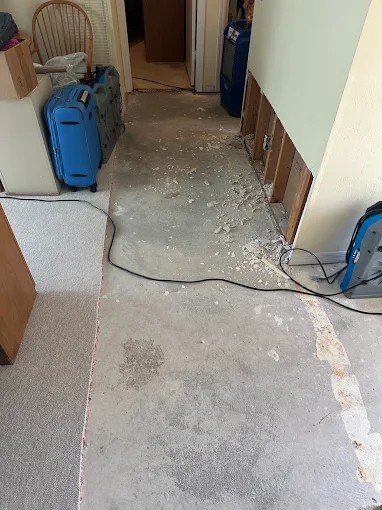
If you are pulling up carpet in a Deltona ranch right now, there is a real chance you are about to find terrazzo, 1970s sheet vinyl, or just raw concrete with old adhesive ghosting the pattern of a floor that came out before you owned the house. What is under that carpet, and what condition the slab is in, determines almost everything about what the vinyl plank job costs and how long it takes. The repeat floor plans across Deltona mean the flooring crew has usually seen the exact layout you are standing in, which is why the scope and the sequence for this work are so predictable here. Before anything else, call and describe what room you are starting in and what’s currently on the floor.
What's actually under the carpet in a Deltona ranch
Houses built here before the 1980s almost never have plywood subfloor. They have a concrete slab, and in a large share of Deltona’s original stock that slab has a layer of poured or precast terrazzo under the carpet, because terrazzo was the standard finish floor when these homes were built and carpet got laid over it later as an update. In other sections, especially additions or homes that had a floor replaced once already, it’s bare slab with old mastic and tack strip staples still in it.
Both are workable bases for vinyl plank. Terrazzo is hard, dense and usually dead flat, which makes it one of the better substrates for a glue-down LVP install once it’s cleaned and the gloss is scuffed. Bare slab needs more prep: grinding down high spots, filling low spots with a leveling compound, and scraping off old adhesive residue that would otherwise telegraph through a thin plank. Finding out which one you have, and how flat it is, is the first real decision point in pricing the job.
The slab moisture problem nobody sees coming
This is the condition that drives the whole job in a Deltona home built in the 1960s or 1970s. Slabs from that era went down with little or no vapor barrier underneath, and Central Florida’s water table and rainfall mean moisture moves up through that concrete year-round, whether or not the floor ever looked wet. Carpet breathes, so nobody notices. Vinyl plank doesn’t, and trapped moisture under a sealed floor is what causes planks to cup, bubble, or let go of the adhesive within a year or two.
That’s why the slab gets tested for moisture vapor emission before a single plank goes down, no matter how dry the house feels. If the reading comes back high, which is common in Deltona’s original housing stock, that changes the installation method: it might mean a moisture mitigation coating on the slab first, or steering toward a floating click-lock floor with a vapor-rated underlayment instead of full glue-down. Skipping this step is the single most common reason a Florida vinyl floor fails early, and it’s not something you can see by looking at the surface.
What the job actually involves, room by room
The sequence matters more than people expect. First, the existing floor covering comes out: carpet, tack strip, and pad in most Deltona living rooms and bedrooms, sometimes old sheet vinyl or ceramic tile in kitchens and baths. In homes with terrazzo, that terrazzo almost always stays as the base. Second, the slab gets cleaned, patched, and checked for flatness and moisture as described above. Third, baseboards and door casings get pulled where the new floor height requires it, since even a thin LVP plus underlayment can change clearances at doors and cabinet toe-kicks. Fourth, the plank goes down, either glued directly to a flat, dry slab or floated over underlayment, with transitions set at doorways and expansion gaps left at every wall. Last, baseboard and shoe molding get reset, and doors get checked for undercut clearance.
The price moves at a few specific points: what’s coming up off the old floor, how much slab leveling is needed, whether moisture mitigation is required, and whether baseboard and trim come off clean or need partial replacement. None of that shows up until the old floor is actually pulled, which is why an honest look at the house matters more than a phone estimate.
Wear layer and why it matters for Deltona's rental stock
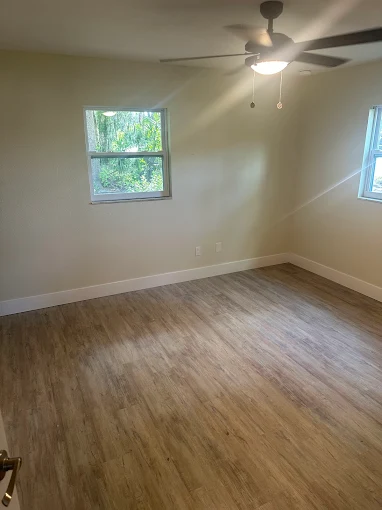
Owner occupancy in Deltona is still high, but the share of these homes held as rentals has been growing for years, and a lot of that inventory is exactly this original 1960s to 1980s ranch stock. For a rental or investment property, the spec that matters most is wear layer thickness, the clear top coating that resists scuffing, scratching, and foot traffic between tenants. A thin wear layer looks fine on day one and shows traffic patterns within a year or two of turnover cycles. A thicker wear layer costs more per plank but holds up through multiple tenants without needing a full replacement, which matters a lot more to a landlord’s long-term cost than the upfront price per square foot.
If this is a rental turnover rather than your own home, it’s worth saying so up front, since the plank selection and the install priorities shift slightly when the goal is durability across tenants rather than a finish for a homeowner who’s staying put.
The one constraint worth knowing before you call
Here’s the part that catches people off guard: if the house has terrazzo under the carpet and that terrazzo has settled unevenly over sixty years, or if sections of slab were patched at different times with slightly different thicknesses, the leveling work to get a flat, continuous plane for vinyl plank can take longer and cost more than the plank installation itself. It’s not a defect in your house, it’s just what sixty-year-old concrete does, and it’s a more common finding in Deltona’s original build-out than in newer construction elsewhere in the area. The honest approach is to check flatness and moisture before quoting a number, not after.
What to look at before you call
Walk the rooms you’re planning to redo and note what’s currently down: carpet, tile, old sheet vinyl, or a glimpse of terrazzo at an edge or closet threshold. Press on the floor in a few spots and note any soft or bouncy areas, which can point to a slab issue rather than just an old floor. If you know of any past leaks, flooding, or musty smells in a room, mention it, since that affects how the moisture testing gets approached. Full details on how vinyl plank flooring installation is scoped and priced are on the main service page, and you can see the range of work Iron Site Property Services handles around Deltona on the city page.
- Existing flooring: Identify whether the rooms have carpet, ceramic tile, sheet vinyl, terrazzo, or multiple materials.
- Room measurements: Estimate the length and width of each area you want to update.
- Visible concerns: Note cracks, uneven surfaces, dampness, or flooring that has lifted or shifted.
- Trim and doorways: Check the condition of your baseboards and identify where transitions may be required.
- Flooring selection: If you have chosen a product, keep its installation method, wear layer specifications, and moisture requirements available.
- Other renovations: Mention any planned painting, cabinet updates, or interior work that could affect the installation schedule.
Where this fits with the rest of the house
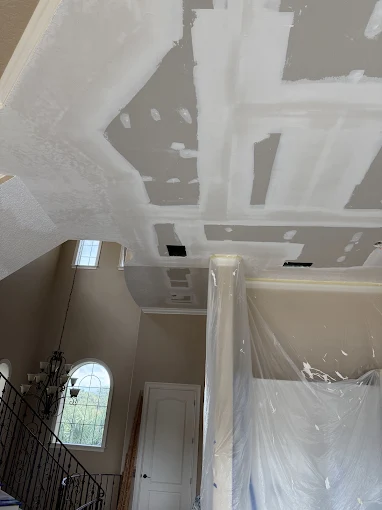
Flooring rarely happens in isolation in these ranches. Pulling carpet in a living room often means the baseboard comes off and goes back painted, or gets replaced if sixty years of shoe vacuums and furniture have chewed it up. A kitchen floor swap is a natural point to also deal with a popcorn ceiling overhead or cabinet hardware that’s been loose for years. None of that is required, but it’s worth mentioning when you call if you’re thinking about tackling more than one room, since sequencing paint, trim, and flooring in the right order saves a second trip and a second mess.
If you’re standing in a Deltona living room looking at carpet you’re ready to be done with, the next step is simple: call (386) 345-2852 and describe the rooms, what’s currently on the floor, and whether you’ve ever noticed dampness or soft spots. From there the slab gets checked, the real scope gets laid out, and you get a number based on what’s actually under your feet instead of a guess.